Blog

  • How Age Changes the Way Koreans Speak to Each Other

    How Age Changes the Way Koreans Speak to Each Other (Tap to Hear It Spoken)

    Korean Honorifics & Speech Levels · Part 3

    How Age Changes the Way Koreans Speak to Each Other

    Why does everyone ask your age so quickly in Korea? It’s not idle curiosity — it’s the single piece of information that determines how the entire conversation will unfold. Tap any phrase below to hear it spoken.
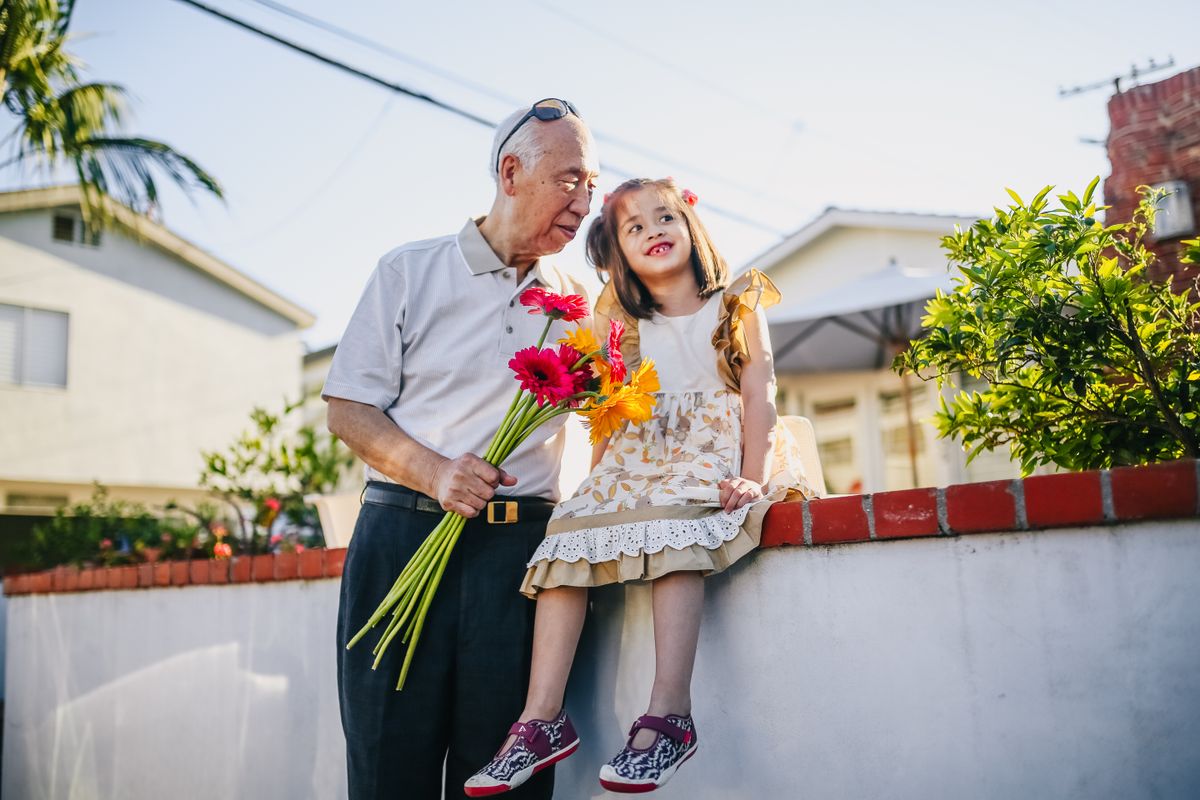
    A grandfather and granddaughter sharing a joyful moment with flowers

    Age hierarchy runs through Korean social life at every level — from family to friend groups to the workplace.

    In many Western cultures, asking someone’s age soon after meeting them can feel rude or intrusive. In Korea, it’s practical — Korean speech requires you to know roughly where someone sits relative to you in age before you can speak to them naturally, because the verb endings and vocabulary you use depend on it. It’s less about hierarchy for its own sake and more about knowing which “setting” to speak in.

    How the audio works: tap the speaker button on any phrase and your device’s built-in Korean voice will say it out loud — no app or download needed.

    How Koreans Ask (and Answer) the Age Question

    Casual, Between Peers

    myeot sarieyo?

    How old are you?

    More Formal / Respectful

    naiga eotteoke doeseyo?

    May I ask your age? (softer, more polite phrasing)

    Once Age Is Established

    If the other person turns out to be older, you’ll typically continue speaking to them politely and may use a relationship term like 형/오빠 (older brother, depending on your gender) or 언니/누나 (older sister) instead of their name. If they’re younger, they’ll usually speak to you politely while you have the option to speak more casually once a friendship is established — but that shift is always negotiated, never assumed.
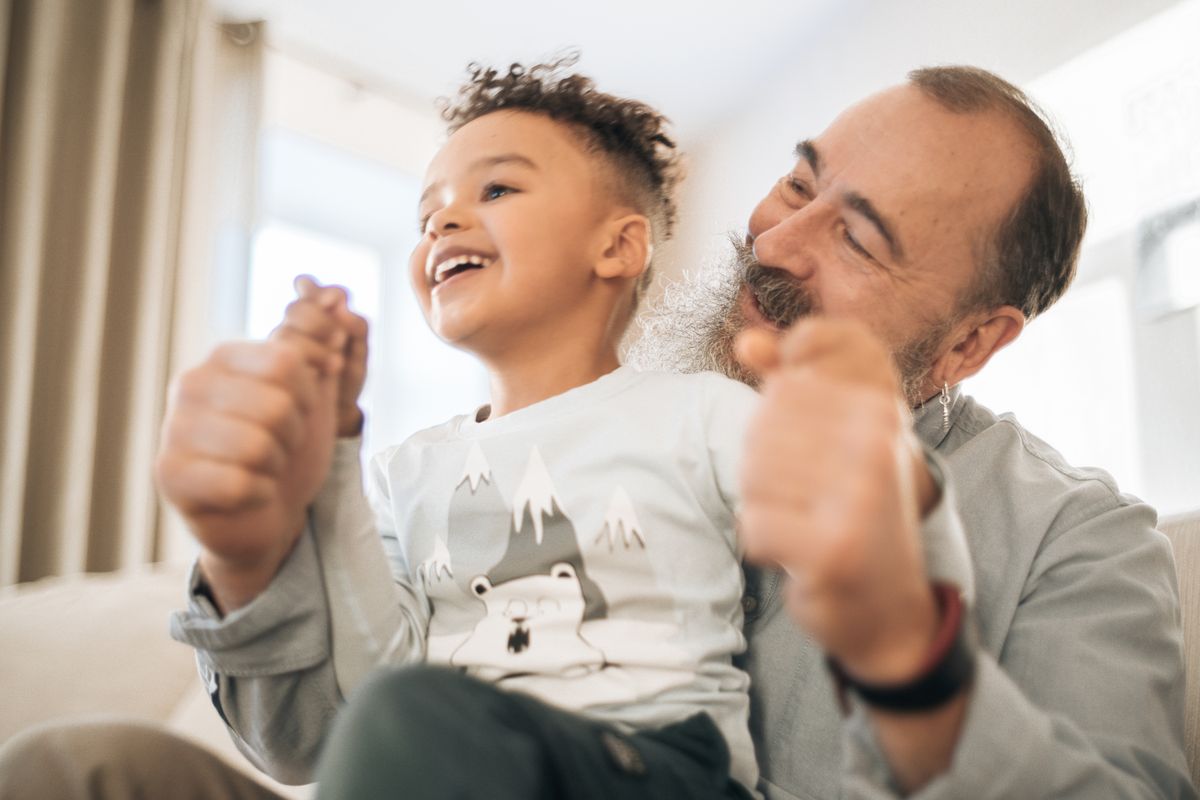
    A grandfather and grandson sharing a happy moment together

    This system extends the family model of respect — for elders, siblings, and even close friends — into everyday social interaction.

    A Note on Korean Age

    One more wrinkle worth knowing: Korea traditionally used “Korean age,” where everyone turns a year older on New Year’s Day rather than their birthday, meaning a newborn is considered one year old at birth. As of 2023, Korea officially adopted international age counting for legal purposes, but you may still hear people casually mention their “Korean age” in conversation, especially with older generations — so don’t be surprised if the numbers don’t quite match what you expect.

    Age Is Just One Piece of the Bigger Picture

    Once you understand how age shapes speech, the logic behind Korean honorifics and titles clicks into place much faster. Here’s the step-by-step system we recommend for learning it properly.

    START LEARNING KOREAN →


    © 2026 Learn Korean Online

    Disclosure: This page may contain affiliate links. If you purchase through a link on this page, we may receive a commission at no additional cost to you.

  • Formal vs Casual Korean

    Formal vs Casual Korean: A Side-by-Side Comparison (Tap to Hear It Spoken)

    Korean Honorifics & Speech Levels · Part 2

    Formal vs Casual Korean: A Side-by-Side Comparison

    Seeing the same everyday phrase both ways, next to each other, makes the pattern click faster than any explanation. Tap any phrase below to hear it spoken.

    Professionals engaged in a serious business discussion in a bright office

    Same meeting, same message — but the language shifts entirely depending on who’s in the room.

    These pairs cover phrases you’ll hear constantly — in dramas, at work, with friends. Notice the pattern: casual forms tend to be shorter and drop the final syllable that polite forms keep.

    How the audio works: tap either phrase in a pair and your device’s built-in Korean voice will say it out loud — no app or download needed.

    “What are you doing?”

    Casual (반말)
    mwohae?
    Polite (해요체)
    mwo haseyo?

    “Have you eaten?” (a common greeting)

    Casual (반말)
    bap meogeosseo?
    Polite (해요체)
    siksahasyeosseoyo?

    “Thank you”

    Casual (반말)
    gomawo
    Polite / Formal
    gamsahamnida
    Three friends sitting on a couch watching TV together at night

    “밥 먹었어?” between friends is affection, not literally a question about food.

    “Sorry”

    Casual (반말)
    mianhae
    Polite / Formal
    joesonghamnida

    “See you later”

    Casual (반말)
    najunge bwa
    Polite (해요체)
    najunge bwayo

    Notice that last pair especially — sometimes the difference between casual and polite is as small as adding a single 요 syllable to the end. It’s a small change with a real social effect, which is part of why this feels so unfamiliar to English speakers at first.

    Recognising the Pattern Is Step One

    Once you can spot casual vs polite forms in dialogue, using them correctly yourself becomes a lot more natural. Here’s the step-by-step system we recommend for building that skill.

    START LEARNING KOREAN →

    © 2026 Learn Korean Online

    Disclosure: This page may contain affiliate links. If you purchase through a link on this page, we may receive a commission at no additional cost to you.

  • Korean Speech Levels Explained

    Korean Speech Levels Explained: When to Use Which (Tap to Hear It Spoken)

    Korean Honorifics & Speech Levels · Part 1

    Korean Speech Levels Explained: When to Use Which

    This is the single biggest thing that trips up English speakers learning Korean — the same sentence changes shape depending on who you’re talking to. Tap any example below to hear it spoken.

    A diverse team having a business meeting in a modern office

    The same idea — “I’m going” — sounds completely different in a boardroom than it does with close friends.

    English shows respect mostly through word choice and tone — “yeah” versus “yes, certainly.” Korean builds respect directly into its grammar. The verb ending itself changes depending on how formal the situation is, which means you can’t really learn “a verb” in Korean without also learning which ending fits which context. Here are the three levels you’ll actually encounter.

    How the audio works: tap the speaker button on any example and your device’s built-in Korean voice will say it out loud — no app or download needed.
    Level 1

    반말 (Banmal) — Casual Speech

    Used with close friends, younger people, or children — never with strangers or anyone older than you unless they’ve explicitly told you it’s okay.

    ga
    Go (casual — said to a close friend)
    Level 2

    해요체 (Haeyo-che) — Everyday Polite

    The default polite level for daily life — shopkeepers, coworkers, new acquaintances, tourists. This is the level worth learning first and using most as a beginner.

    gayo
    Go (polite — safe in almost any situation)
    Level 3

    합니다체 (Hamnida-che) — Formal Speech

    Used in news broadcasts, formal presentations, military contexts, and first meetings in a business setting. It sounds crisp and a little distant — appropriate for the occasion, but not how friends talk.

    gamnida
    Go (formal — boardrooms, announcements, first impressions)
    A group of friends laughing and embracing each other outdoors

    Banmal is reserved for genuine closeness — it’s a sign of trust, not just informality.

    Which One Should You Actually Learn First?

    해요체 (haeyo-che). It’s polite enough to never cause offence, natural enough that you won’t sound stiff, and it’s what most textbooks and apps teach as the default for exactly that reason. Learn this level solidly first, then layer in formal 합니다체 for professional contexts and casual 반말 once you have real relationships where it’s appropriate.

    Speech Levels Are the Backbone of Korean Politeness

    Once these three levels feel intuitive, honorific verbs and forms of address make a lot more sense. Here’s the step-by-step system we recommend for building on this.

    START LEARNING KOREAN →
    © 2026 Learn Korean Online

    Disclosure: This page may contain affiliate links. If you purchase through a link on this page, we may receive a commission at no additional cost to you.

  • How Long Does It Really Take to Learn Korean?

    How Long Does It Really Take to Learn Korean? (Tap to Hear It Spoken)

    Korean for Beginners · Part 6

    How Long Does It Really Take to Learn Korean?

    The honest answer depends on your goal — “order food confidently” and “read a novel” are very different timelines. Here’s a realistic breakdown, with example phrases at each stage. Tap any to hear it spoken.

    A pen resting on a to-do list and calendar on a desk

    Progress in Korean is steady and measurable — it just takes longer than most people expect at the start.

    The U.S. Foreign Service Institute, which trains American diplomats, classifies Korean as one of the hardest languages for English speakers to learn — estimating around 2,200 class hours to reach professional fluency, roughly four times longer than a language like Spanish or French. That number sounds discouraging, but it’s measuring diplomatic fluency, not “can hold a conversation.” Real, useful progress happens much sooner.

    How the audio works: tap any phrase and your device’s built-in Korean voice will say it out loud — no app or download needed.
    1–3 Months

    Reading and Basic Survival Phrases

    With consistent daily practice, most learners can read Hangul fluently and hold very basic exchanges — greetings, ordering food, asking directions — within the first couple of months.

    annyeonghaseyo, jeoneun haksaengieyo
    Hello, I’m a student
    6–12 Months

    Everyday Conversation

    By six months to a year of consistent study, most learners can handle everyday conversations — talking about your day, your interests, and simple opinions — even if you’re still reaching for words sometimes.

    jeoneun hanguk deurama boneun geol joahaeyo
    I like watching Korean dramas
    A desk calendar next to a black pen

    Consistency matters far more than intensity — twenty minutes daily beats a single long session once a week.

    1–2 Years

    Comfortable, Natural Conversation

    Around the one to two year mark with regular practice, conversation starts feeling natural rather than effortful — you can follow most TV dialogue without subtitles and express more complex ideas.

    cheoeumeneun eoryeowonneunde jigeumeun hwolssin pyeonhaeyo
    It was hard at first, but it’s much more comfortable now
    2+ Years

    Advanced Fluency

    True advanced fluency — reading novels, following fast native conversation, using nuanced or idiomatic expressions — realistically takes several years of sustained exposure, ideally including time immersed in the language.

    What Actually Speeds This Up

    The single biggest factor isn’t natural talent — it’s consistency. Daily, focused practice beats occasional long sessions by a wide margin, and combining structured lessons with real exposure (dramas, music, conversation practice) accelerates things further than either approach alone.

    The Fastest Path Is a Structured One

    Random self-study gets you somewhere eventually, but a clear step-by-step system gets you there faster and with fewer wrong turns. Here’s the one we recommend.

    START LEARNING KOREAN →

    © 2026 Learn Korean Online

    Disclosure: This page may contain affiliate links. If you purchase through a link on this page, we may receive a commission at no additional cost to you.

  • Common Beginner Mistakes When Learning Korean

    Common Beginner Mistakes When Learning Korean (Tap to Hear It Spoken)

    Korean for Beginners · Part 5

    Common Beginner Mistakes When Learning Korean

    Everyone makes these same handful of mistakes early on — the good news is they’re easy to fix once you know to look out for them. Tap any example below to hear it spoken.

    A student sitting at a desk in a classroom setting

    Recognising these patterns early saves months of relearning bad habits later.

    How the audio works: tap any word or phrase and your device’s built-in Korean voice will say it out loud — no app or download needed.
    Mistake 1

    Relying Only on Romanization

    It’s tempting to skip Hangul and just read everything spelled out in English letters. The problem: romanization is inconsistent and often inaccurate, and it caps how far you can progress — menus, signs, and subtitles won’t wait for you to catch up. Learning Hangul takes a single focused sitting and removes this ceiling entirely.

    Mistake 2

    Dropping Particles When Speaking

    English doesn’t have particles, so beginners often skip them when speaking, assuming word order alone gets the meaning across. In Korean, particles do real grammatical work — leaving them out makes sentences sound broken rather than just casual.

    Missing Particle
    With Particle
    Mistake 3

    Translating Word-for-Word From English

    Korean and English structure ideas differently, so directly translating an English sentence often produces something a native speaker would never actually say. It’s more useful to learn whole phrases as units than to build sentences word by word in your head.

    A student writing intently at a desk

    Slow, careful practice early on prevents mistakes from calcifying into habits later.

    Mistake 4

    Only Learning One Politeness Level

    Some learners get comfortable with formal textbook Korean and are then lost the first time a friend speaks to them casually — or vice versa, learning only casual speech from dramas and freezing up in a formal setting. Both levels matter, and exposure to both from early on prevents this gap.

    Mistake 5

    Avoiding Speaking Out of Fear of Mistakes

    This is the big one. Reading and listening comfortably for months without ever attempting to speak feels safe, but speaking is a different skill entirely, and it only develops through use — mistakes included. Native speakers are almost always encouraging toward learners who are trying, not judgmental.

    Avoid the Long Way Round

    A structured approach from the start heads off most of these mistakes before they become habits. Here’s the step-by-step system we recommend.

    START LEARNING KOREAN →

    © 2026 Learn Korean Online

    Disclosure: This page may contain affiliate links. If you purchase through a link on this page, we may receive a commission at no additional cost to you.

  • Korean Verb Endings Explained Simply

    Korean Verb Endings Explained Simply (Tap to Hear It Spoken)

    Korean for Beginners · Part 4

    Korean Verb Endings Explained Simply

    Korean verbs change their ending depending on how polite or formal you need to be — and once you learn the pattern, it applies to almost every verb in the language. Tap any example below to hear it spoken.

    A hand holding a blue ballpoint pen writing in a notebook

    Once you see the pattern repeat across different verbs, it stops feeling like memorisation and starts feeling like a formula.

    Every Korean verb has a dictionary form ending in “다” — that’s the form you’ll find in a dictionary, but you’ll almost never say it out loud in conversation. Instead, you drop “다” and add an ending that matches how polite the situation calls for. As a beginner, you really only need two of these endings to get by almost everywhere.

    How the audio works: tap the speaker button on any example and your device’s built-in Korean voice will say it out loud — no app or download needed.

    The Two Endings You’ll Use Constantly

    Everyday Polite (해요체)

    -ayo / -eoyo

    The default polite ending — safe with strangers, shopkeepers, most situations

    Formal (합니다체)

    -mnida / -seumnida

    More formal — news broadcasts, presentations, first meetings at work

    The Same Verb, Three Ways

    Here’s the pattern in action across three common verbs. Notice how the dictionary form always ends in 다, and both polite forms replace it with a different ending:

    가다
    to go
    Everyday Polite
    Formal
    먹다
    to eat
    Everyday Polite
    Formal
    좋다
    to be good
    Everyday Polite
    Formal
    A hand holding a pen writing in an open notebook

    Try conjugating a few verbs you already know by hand — it’s the fastest way to make the pattern stick.

    Which One Should You Actually Use?

    As a beginner travelling or chatting casually, the everyday polite form (-아요 / -어요) will cover almost every situation you run into — it’s warm without being overly formal. Save the formal -ㅂ니다 / -습니다 ending for job interviews, announcements, or speaking to someone significantly senior to you. If in doubt, -아요 / -어요 is always the safer default.

    Verb Endings Are One Piece of a Bigger Pattern

    Once endings feel natural, tense, negatives, and questions all follow similar logical patterns. Here’s the step-by-step system we recommend for building on this foundation.

    START LEARNING KOREAN →

    © 2026 Learn Korean Online

    Disclosure: This page may contain affiliate links. If you purchase through a link on this page, we may receive a commission at no additional cost to you.

  • The Most Common Korean Words to Learn First

    The Most Common Korean Words to Learn First (Tap to Hear It Spoken)

    Korean for Beginners · Part 3

    The Most Common Korean Words to Learn First

    A small set of high-frequency words does most of the heavy lifting in everyday Korean. Learn these before anything else. Tap any word below to hear it spoken.

    A person sitting at a desk studying on a laptop

    These are the words you’ll see and hear again and again once you start paying attention.

    Frequency lists of the “100 most common words” exist for every language, and Korean is no exception — but memorising a raw list rarely sticks. What works better is learning the small core of pronouns, question words, and everyday verbs that appear in nearly every sentence, then building outward from there. Here’s that core set, grouped so it’s easier to hold onto.

    How the audio works: tap any word and your device’s built-in Korean voice will say it out loud — no app or download needed.

    Pronouns

    Question Words

    A person writing in a notebook with a pen

    Writing these words out a few times, alongside speaking them aloud, builds recall much faster than reading alone.

    Everyday Verbs

    Everyday Nouns

    “하다” (to do) deserves special mention — it’s one of the most versatile verbs in Korean and attaches to hundreds of nouns to make new verbs, similar to how English adds “-ify” or “-ize” to words. Once you know it, you unlock a huge chunk of everyday vocabulary almost for free.

    These Words Are the Foundation, Not the Whole House

    Knowing high-frequency words is a great head start, but real fluency comes from combining them into sentences you can actually use. Here’s the step-by-step system we recommend.

    START LEARNING KOREAN →

    © 2026 Learn Korean Online

    Disclosure: This page may contain affiliate links. If you purchase through a link on this page, we may receive a commission at no additional cost to you.

  • Korean Sentence Structure for Complete Beginners

    Korean Sentence Structure for Complete Beginners (Tap to Hear It Spoken)

    Korean for Beginners · Part 2

    Korean Sentence Structure for Complete Beginners

    English puts the verb in the middle. Korean puts it at the end — and once that one idea clicks, a huge amount of Korean grammar starts making sense. Tap any example below to hear it spoken.

    Students studying together with a laptop and notebooks at a table

    Korean sentence order feels backwards at first — until you see the pattern repeat itself in every sentence.

    In English, we say Subject–Verb–Object: “I eat an apple.” Korean uses Subject–Object–Verb: the equivalent sentence is closer to “I an-apple eat.” The verb always comes last. Once you internalise that single rule, reading and forming basic Korean sentences gets dramatically easier.

    How the audio works: tap the speaker button on any sentence and your device’s built-in Korean voice will say it out loud — no app or download needed.

    The Core Word Order

    Basic Sentence

    jeoneun haksaengieyo

    I am a student (literally: “I-topic student-am”)

    With an Object

    jeoneun sagwareul meogeoyo

    I eat an apple (literally: “I-topic apple-object eat”)

    저는
    Subject
    사과를
    Object
    먹어요
    Verb

    The Little Words That Do the Heavy Lifting

    Those tiny syllables tacked onto the end of nouns — 는, 를, 이 — are called particles, and they’re one of the most important features of Korean grammar. They mark what role each word plays in the sentence, which is exactly why word order can be more flexible in Korean than in English: the particle tells you the job, not the position.

    Topic Marker

    eun / neun

    Marks the topic of the sentence (“as for me…”)

    Subject Marker

    i / ga

    Marks the grammatical subject

    Object Marker

    eul / reul

    Marks the object of the verb

    A student studying with a laptop in a sunny classroom

    Once particles click, you’ll start noticing them in every single Korean sentence you read.

    Try It With a Full Sentence

    Putting It Together

    oneul nalssiga joayo

    The weather is good today

    Notice “오늘” (today) sits at the very front, since time expressions usually come first in Korean, followed by the subject (“날씨가,” the weather), and the verb (“좋아요,” is good) closes the sentence out — same pattern as before, just with a time word added to the front.

    Word Order Is the Skeleton — Vocabulary Fills It In

    Once the structure feels natural, building actual sentences is mostly a matter of vocabulary. Here’s the step-by-step system we recommend for building both together.

    START LEARNING KOREAN →

    © 2026 Learn Korean Online

    Disclosure: This page may contain affiliate links. If you purchase through a link on this page, we may receive a commission at no additional cost to you.

  • How to Read Hangul in One Sitting

    How to Read Hangul in One Sitting (Tap to Hear It Spoken)

    Korean for Beginners · Part 1

    How to Read Hangul in One Sitting

    Korean’s alphabet has a reputation for looking intimidating — but it’s actually one of the fastest writing systems in the world to learn. Tap any character below to hear how it sounds.

    A close-up of a hand writing in a notebook

    Most learners can read basic Hangul after a single focused study session — it really is that logical.

    Hangul was created in 1443 specifically to be easy to learn — the Korean king who commissioned it wanted ordinary people to be able to read and write, not just the educated elite. Unlike Chinese characters or Japanese kanji, there’s no memorizing thousands of symbols. There are 24 basic letters, and once you know them, you can sound out any word in the language.

    How the audio works: tap the speaker button or any letter card and your device’s built-in Korean voice will say it out loud — no app or download needed.

    The Basic Vowels

    Korean vowels are simple lines and dots. Here are the six most common ones:

    The Basic Consonants

    Consonants are shaped after the position your mouth and tongue make when you pronounce them — it sounds strange, but it genuinely helps the letters feel logical rather than arbitrary.

    A close-up shot of a person writing on a notebook

    Writing each letter out by hand a few times helps it stick far faster than reading alone.

    Putting Letters Into Blocks

    This is the part that makes Hangul unique: letters aren’t written in a straight line like English. They’re grouped into square blocks, where each block represents one syllable — usually a consonant followed by a vowel, and sometimes a final consonant underneath.

    Building a Syllable

    ga (ㄱ + ㅏ)

    The consonant ㄱ (g) plus the vowel ㅏ (a) combine into one block

    Building a Syllable

    na (ㄴ + ㅏ)

    The consonant ㄴ (n) plus the vowel ㅏ (a)

    Building a Syllable

    da (ㄷ + ㅏ)

    The consonant ㄷ (d) plus the vowel ㅏ (a)

    Real Words You Already Know

    Hello

    annyeong

    Hi (casual greeting)

    Thank You

    gamsa

    Gratitude (the root of “thank you”)

    Love

    sarang

    Love

    Notice something? You could already sound out every one of those words using just the letters covered above. That’s the whole trick to Hangul — learn the small set of building blocks once, and every word in the language becomes readable.

    Reading Is the First Step — Understanding Comes Next

    Once Hangul clicks, the next challenge is grammar and vocabulary. Here’s the step-by-step system we recommend for building real Korean from here.

    START LEARNING KOREAN →

    © 2026 Learn Korean Online

    Disclosure: This page may contain affiliate links. If you purchase through a link on this page, we may receive a commission at no additional cost to you.

  • Writing Fan Messages and Comments in Korean

    Writing Fan Messages and Comments in Korean (Tap to Hear It Spoken)

    K-Drama & K-Pop Korean · Part 6

    Writing Fan Messages and Comments in Korean

    Weverse, Twitter, birthday project comments — a short message in actual Korean means a lot more than the same words in English. Tap any phrase below to hear it spoken.

    A close-up of a person typing a text message on a smartphone

    A few genuine Korean phrases go a long way in comment sections and fan projects.

    You don’t need to write a full sentence to leave a message that lands. These are short, sincere phrases used constantly in real fan comments and birthday project messages — simple enough to use with confidence, even if you’re only a few weeks into learning.

    How the audio works: tap the speaker button on any phrase and your device’s built-in Korean voice will say it out loud — no app or download needed.

    Showing Support

    General Support

    eungwonhaeyo

    I’m cheering for you / supporting you

    Long-Term Support

    hangsang eungwonhalgeyo

    I’ll always support you

    Affection

    saranghaeyo

    I love you (the standard, sincere fan comment closer)

    Encouragement and Celebration

    Good Luck

    hwaiting!

    Fighting! (perfect before a comeback, tour, or big event)

    Congratulations

    chukhahaeyo

    Congratulations (for a win, milestone, or debut anniversary)

    A hand holding a blue ballpoint pen writing in a notebook

    Drafting a message by hand first is a good way to double-check the spelling before you post it.

    Signing Off

    Closing a Message

    daeume tto mannayo

    Let’s meet again next time

    A short, genuine message in Korean stands out in a comment section full of English — and it shows a level of effort that a lot of idols and fellow fans genuinely notice and appreciate.

    Write Whole Messages, Not Just Templates

    These phrases work great as-is, but learning basic sentence structure means you can write something personal instead of copying a template every time. Here’s the step-by-step system we recommend.

    START LEARNING KOREAN →

    © 2026 Learn Korean Online

    Disclosure: This page may contain affiliate links. If you purchase through a link on this page, we may receive a commission at no additional cost to you.