Tourist Korean · Part 1
Asking for Directions in Korean: A Tourist’s Phrasebook
Lost in Seoul with no idea how to ask a stranger which way to the subway? Here are the exact phrases you need — tap any of them to hear how it’s actually pronounced.
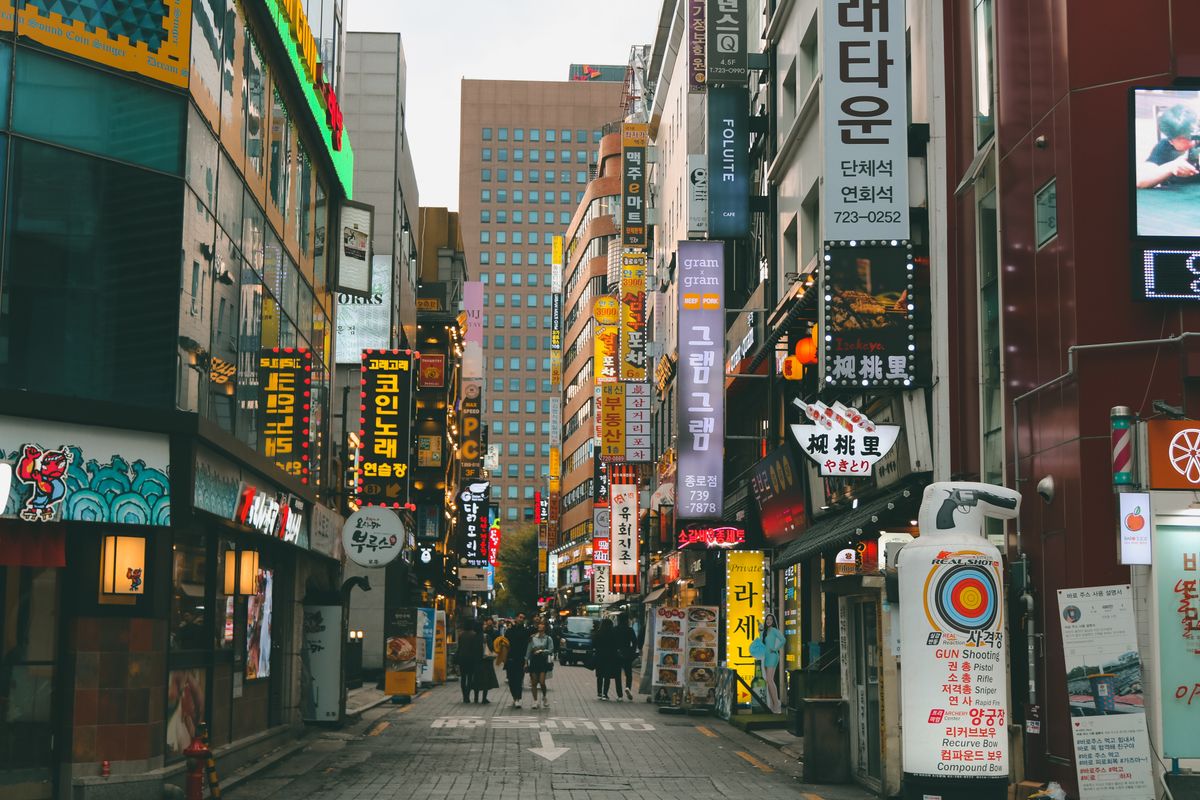
Seoul’s streets are easy to navigate once you know a few key phrases.
You don’t need to be fluent in Korean to get around Seoul, Busan, or anywhere else in South Korea. Most tourists only ever need a small handful of phrases — and once you can say them with confidence, asking a stranger for help stops being scary and starts being kind of fun.
Below are the phrases that come up again and again when you’re trying to find your way somewhere. Each one has the Korean script, how to say it (romanized), what it means, and a speaker button so you can hear the real pronunciation before you try it yourself.
Getting Someone’s Attention Politely
Basic Politeness
sillyehamnida
Excuse me (formal, polite — safe to use with anyone)
Getting Help
jeogiyo
Excuse me! (casual, used to call a passerby or staff)
Asking Where Something Is
Finding a Place
jihacheollyeogi eodiyeyo?
Where is the subway station?
Finding a Place
hwajangsiri eodiyeyo?
Where is the bathroom?
Finding a Place
i geuncheoe pyeonuijeomi isseoyo?
Is there a convenience store near here?
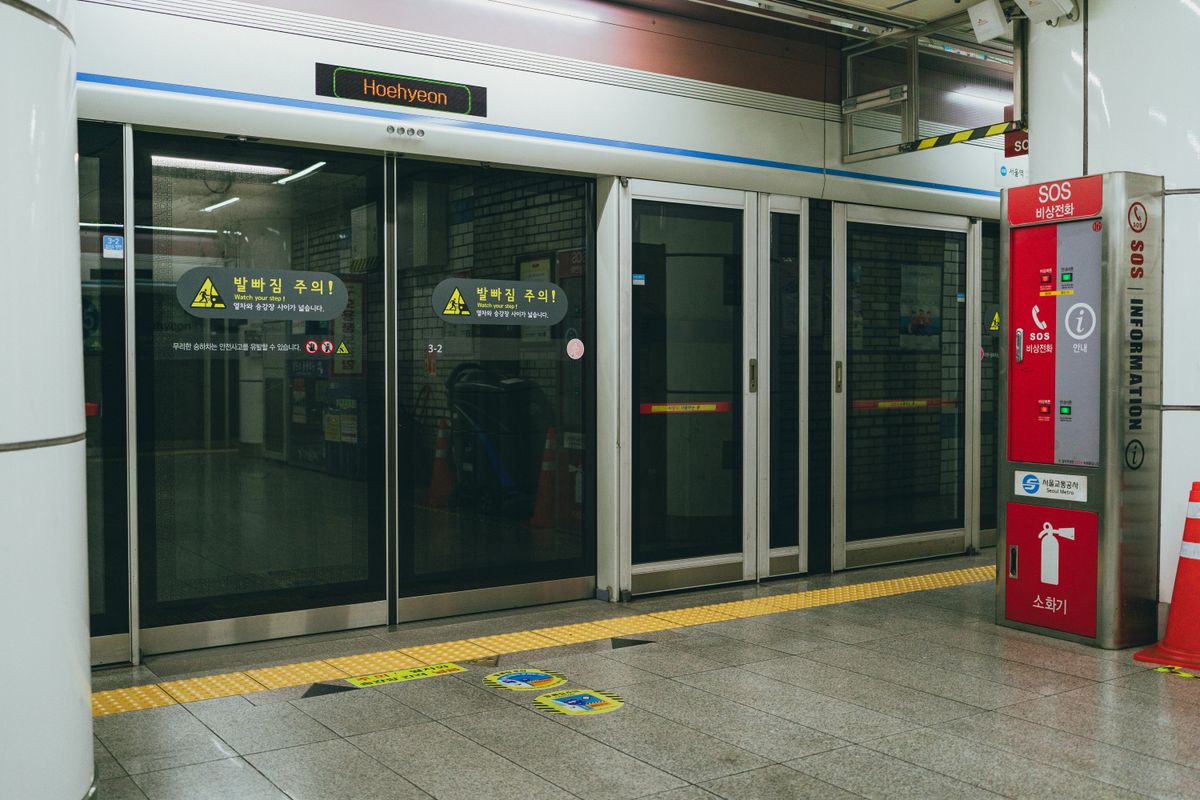
Subway staff are used to tourists — a short phrase and a point at your phone map will usually get you sorted.
Understanding the Directions Back
Here’s the tricky part: once you ask, someone is going to answer you — often quickly. These are the direction words to listen for so you can at least catch the gist.
Direction
jikjinhaseyo
Go straight
Direction
oenjjogeuro gaseyo
Go left
Direction
oreunjjogeuro gaseyo
Go right
Direction
yeogiseo gakkawoyo
It’s close from here
Saying Thank You
Closing It Out
gamsahamnida
Thank you (polite, works in any situation)
That’s genuinely most of what you’ll need. String a few of these together — “실례합니다, 지하철역이 어디예요?” (“Excuse me, where’s the subway station?”) — and you’ll get a lot further than pointing at your phone and hoping.
Want to Actually Hold a Conversation, Not Just Ask Directions?
This is just one small piece of what you’ll need for a trip to Korea. If you want to go from a handful of survival phrases to genuinely understanding and speaking Korean, here’s the step-by-step system we recommend.
START LEARNING KOREAN →