Falling in Love: Romantic Korean Phrases

Falling in Love: Romantic Korean Phrases and How to Say “I Love You”

Falling in Love. Korean has more than one way to say “I love you,” and choosing the right one signals exactly how serious you are — get it wrong and you might say something far more intense than you meant, or something that sounds oddly formal for a romantic moment. Here’s how the levels actually work.

The Three Levels of “I Love You”

Korean Romanization When to Use It
사랑해 saranghae Casual, intimate — used between close partners or close friends/family
사랑해요 saranghaeyo Polite version — safe for a newer relationship or slightly formal context
사랑합니다 saranghamnida Very formal — more common in speeches or formal declarations than everyday romance
Common mistake: Jumping straight to 사랑해 (the casual form) with someone you’ve just started dating can come across as overly familiar. 사랑해요 is the safer starting point until a relationship is clearly established and both people have moved to casual speech (반말) generally.

Beyond “I Love You”: Everyday Affection

Korean Romanization English
좋아해 joahae I like you (a common first step before “I love you”)
보고 싶어 bogo sipeo I miss you (literally “I want to see you”)
너밖에 없어 neobakke eopseo There’s no one else but you
평생 함께하자 pyeongsaeng hamkkehaja Let’s be together for life

Falling in Love. Korean has more than one way to say “I love you,” and choosing the right one signals exactly how serious you are — get it wrong and you might say something far more intense than you meant, or something that sounds oddly formal for a romantic moment. Here’s how the levels actually work.  The Confession Moment: 고백 (Gobaek)

In Korean dating culture, 고백 — a direct confession of romantic feelings — is often a distinct, deliberate moment rather than something that happens gradually. It’s the K-drama trope of someone formally saying “나랑 사귈래?” (Will you go out with me?) rather than relationships simply drifting into official status. Knowing this phrase and the cultural weight behind it will make a lot more sense of the confession scenes you’ve seen in dramas.

Korean Romanization English
나랑 사귈래? narang sagwillae? Will you go out with me?
저 좋아하시나요? jeo joahasinayo? Do you like me? (polite)

Aegyo: Cute Affection in Speech

애교 (aegyo) refers to a deliberately cute, endearing way of speaking or acting — often used playfully with a romantic partner. It can involve a slightly higher pitch, elongated vowels, or playful phrasing, and it’s a genuinely common part of Korean romantic communication rather than something exaggerated purely for dramas, though the intensity varies a lot by personality and relationship.

Ready for the next real-world scenario? See the First Date Korean post in this cluster, or head back to the dating vocabulary pillar guide for the full picture.

Pronunciation audio uses your browser’s built-in text-to-speech and may not perfectly reflect native pronunciation nuances.
Korean Dating Phrases

Korean Dating Phrases: Your Complete Relationship Vocabulary Guide

Whether you’re chatting with someone on a Korean dating app, navigating your first 소개팅 (blind date), or just trying to keep up with the relationship drama in your favorite K-drama, dating vocabulary is some of the most useful — and most emotionally loaded — Korean you’ll ever learn. This pillar guide covers the basics and links out to the deeper posts in this cluster.

Click any speaker icon throughout this cluster to hear native pronunciation using your browser’s built-in text-to-speech.

Why Dating Korean Is Its Own Category

Korean relationship vocabulary isn’t just a vocabulary list — it comes wrapped in a layer of social context that doesn’t map directly onto English dating culture. Terms like 썸 (a pre-relationship “something” stage) or 애교 (cute, affectionate behavior) describe concepts that don’t have a clean one-word English translation. Understanding the words means understanding a bit of the culture behind them, which is why this cluster pairs vocabulary with cultural context throughout.

Core Relationship Status Vocabulary

KoreanRomanizationEnglish
썸 sseomThe ambiguous “something” stage before officially dating
사귀다 sagwidaTo date / to go out with someone
남자친구 namja chinguBoyfriend
여자친구 yeoja chinguGirlfriend
소개팅 sogaetingA blind date, usually set up by a friend
애교 aegyoCute, affectionate behavior often used with a partner

What This Cluster Covers

  • Falling in Love — romantic phrases, how to say “I love you” correctly, and the honorific levels that matter
  • First Date Korean — the essential phrases for meeting someone new and navigating that first conversation
  • Korean Dating Culture — what K-dramas get right, what they exaggerate, and the real etiquette
  • Hard Conversations — breakups, mixed feelings, and vocabulary for difficult relationship moments
  • Marriage & Commitment — long-term relationship vocabulary, meeting the family, and proposal phrases
A note on honorifics: Korean relationship speech shifts significantly based on how well you know someone and their age relative to yours. Casual speech (반말) is common between established couples, but starting with polite speech (존댓말) is safer and more respectful when a relationship is new. This distinction comes up throughout the cluster.

Start Practicing

The fastest way to make this vocabulary stick is to hear it and say it out loud, not just read it. Use the speaker buttons throughout this cluster to practice pronunciation, and try building your own short sentences with the phrases as you go — even a simple “제 이름은 ___예요” (my name is ___) is a real, usable building block.

Next in This Cluster

  • Falling in Love: Romantic Korean Phrases and How to Say “I Love You”
  • First Date Korean: Essential Phrases for Meeting Someone New
  • Korean Dating Culture: What K-Dramas Get Right (and Wrong)
  • Breakups and Hard Conversations: Korean Phrases for Difficult Moments
  • Marriage & Long-Term Relationships: Korean Commitment Vocabulary

Pronunciation audio uses your browser’s built-in text-to-speech and may not perfectly reflect native pronunciation nuances. For best results, cross-reference with native audio sources when possible.

Essential Soju and Hoesik Vocabulary


Korean Drinking & Social Culture · Part 2

Essential Soju and Hoesik Vocabulary

Essential Soju and Hoesik Vocabulary. Soju and the company dinner culture built around it are a genuine part of Korean social and work life. Here’s the vocabulary you’ll need. Tap any word below to hear it spoken.

Essential Soju and Hoesik Vocabulary

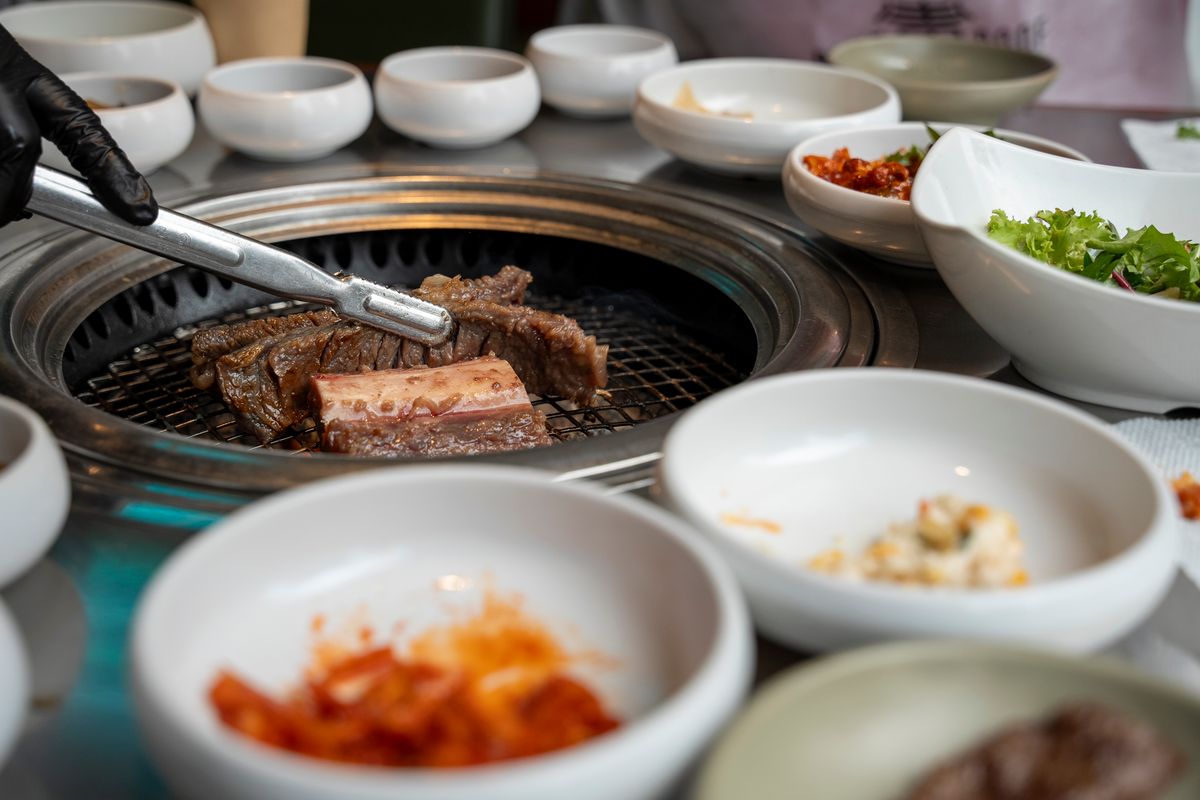
Korean BBQ and soju are a classic pairing at both casual get-togethers and company dinners.

소주 (soju) is Korea’s most iconic spirit — a clear, mild liquor usually around 16–20% alcohol, drunk socially rather than sipped slowly. It’s deeply tied to Korean work and social culture, especially through 회식 (hoesik), the company team dinner that’s a genuine institution in Korean workplaces.

How the audio works: tap the speaker button on any word and your device’s built-in Korean voice will say it out loud — no app or download needed.

The Basics

The Drink Itself

soju

Korea’s iconic clear spirit

The Occasion

hoesik

Company dinner / team dinner

The Food That Comes With It

anju

Food eaten alongside drinking — essentially never optional

Two people clinking their drink bottles together

Hoesik dinners often move between venues over the course of an evening — each stop is its own tradition.

How the Night Moves

Bottoms Up

wonshot

One shot — drink the whole glass at once (from English “one shot”)

The Second Stop

icha

“Second round” — moving to a different venue after the first

A Strong Combination

poktanju

“Bomb drink” — a soju-and-beer mix, popular at hoesik dinners

It’s genuinely common for a hoesik night to move through two or even three venues — dinner and drinks first, then a second stop for more drinks or noraebang (karaoke), sometimes a third for coffee or dessert. Each stop is called by its number: 1차, 2차, 3차.

Understanding the Culture Makes the Words Stick

Vocabulary like this lands so much better once you understand the social context around it. Here’s the step-by-step system we recommend for building both together.

START LEARNING KOREAN →

© 2026 Learn Korean Online

Disclosure: This page may contain affiliate links. If you purchase through a link on this page, we may receive a commission at no additional cost to you.

When It’s Okay to Drop Formality in Korean


Korean Honorifics & Speech Levels · Part 6

When It’s Okay to Drop Formality in Korean  Casual speech isn’t just about comfort — in Korean, switching to banmal is treated as a real social moment, and there’s a specific way to make that shift happen. Tap any phrase below to hear it spoken.

When It's Okay to Drop Formality in Korean
When It’s Okay to Drop Formality in Korean

Getting to casual speech with someone is often a small milestone in a Korean friendship, not just a formality dropped.

Unlike English, where you might just naturally relax your tone as you get to know someone, Korean often treats the shift to casual speech as an explicit, spoken moment — especially between people close in age. It’s a small act of trust, and it’s genuinely common to ask for permission before doing it.

How the audio works: tap the speaker button on any phrase and your device’s built-in Korean voice will say it out loud — no app or download needed.

Asking to Switch to Casual Speech

Requesting the Switch

mal noado dwaeyo?

Is it okay if I speak casually with you?

Granting It (Said by the Senior Person)

pyeonhage malhae

Feel free to speak comfortably / casually

Suggesting It Mutually

uri mal noeulkkayo?

Should we speak casually with each other?

Situations Where Casual Speech Is Automatic

Permission isn’t always needed. A few situations where casual speech is the natural default:

Same-Age Friends

Once a friendship forms between people the same age, casual speech is usually the norm without needing to ask.

Speaking to Children

Adults generally speak casually to young children by default, regardless of the child’s relationship to them.

Close, Long-Term Friends

Even with an age gap, very close long-term friends sometimes mutually agree to drop formality entirely.

When It's Okay to Drop Formality in Korean
When It’s Okay to Drop Formality in Korean

Once formality drops between friends, it rarely goes back — the shift tends to be permanent.

When to Stay Cautious

As a general rule, never initiate the switch to banmal with someone older than you unless they suggest it first — the offer should come from the senior person. And in professional contexts, even close colleagues often keep polite speech at work regardless of how casual they are outside it. When you’re unsure, staying polite costs you nothing; dropping formality too soon can genuinely land badly.

Formality Is a Skill You Build Over Time

Reading these social cues gets easier with real exposure and practice. Here’s the step-by-step system we recommend for building genuine confidence with Korean, honorifics included.

START LEARNING KOREAN →

© 2026 Learn Korean Online

Disclosure: This page may contain affiliate links. If you purchase through a link on this page, we may receive a commission at no additional cost to you.