Tourist Korean · Part 2
Ordering Food in Korean: A Tourist’s Phrasebook
Staring at a menu you can’t read is part of the fun of travelling — but knowing a few phrases means you’ll actually get what you want. Tap any phrase below to hear how it’s really pronounced.
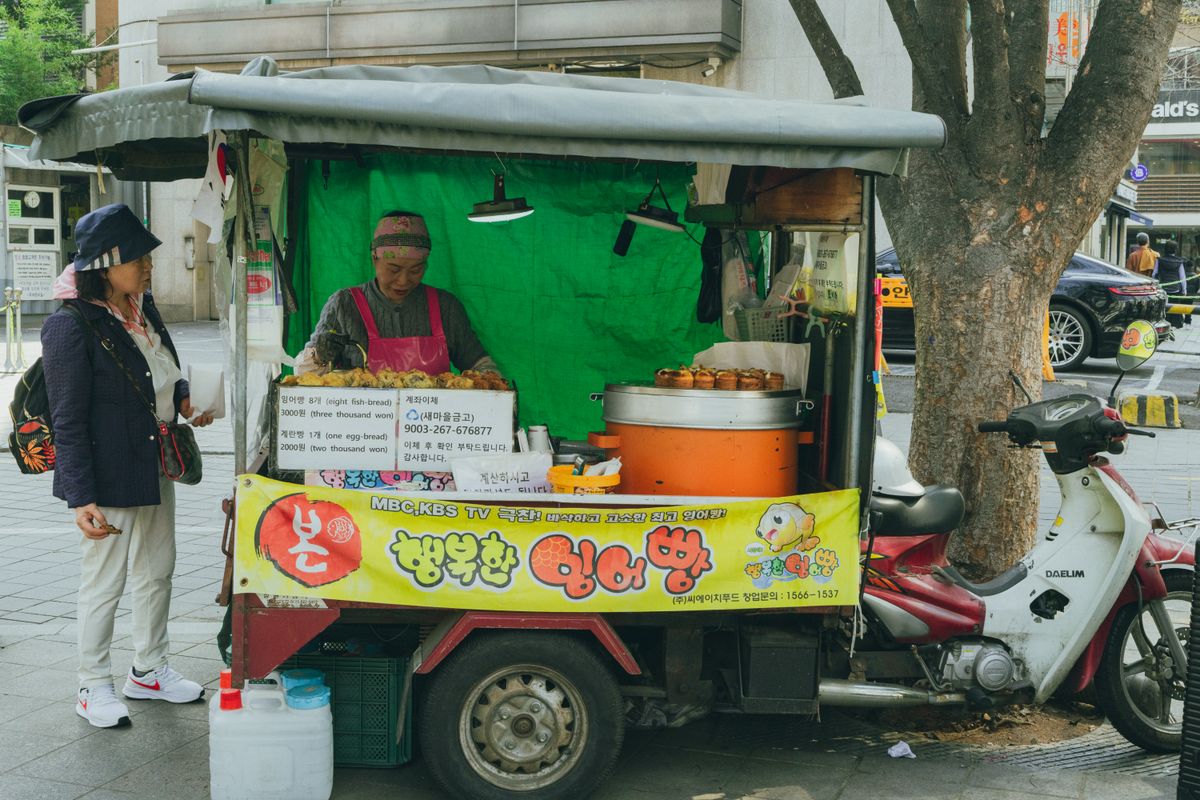
Street stalls, sit-down restaurants, or a convenience store meal — these phrases work everywhere.
Korean restaurants and food stalls move fast, and staff generally won’t switch to English just because you look like a tourist. That’s not unfriendly — it’s just how it works. A handful of short phrases will get you seated, fed, and out the door with a full stomach and no awkward pointing-and-hoping.
Getting Seated and Ordering
Getting Attention
yeogiyo
Excuse me! (the standard way to call staff over)
Menu
menyupan juseyo
Menu, please
Ordering
igeo juseyo
This one, please (point at the menu or a photo)
Quantity
du gae juseyo
Two, please
Special Requests
Spice Level
maepji anke haejuseyo
Please make it not spicy
Allergies
jeoneun ttangkong allereugiga isseoyo
I have a peanut allergy (swap in any ingredient)
Drinks
mul jom juseyo
Water, please (usually free and refilled without asking)
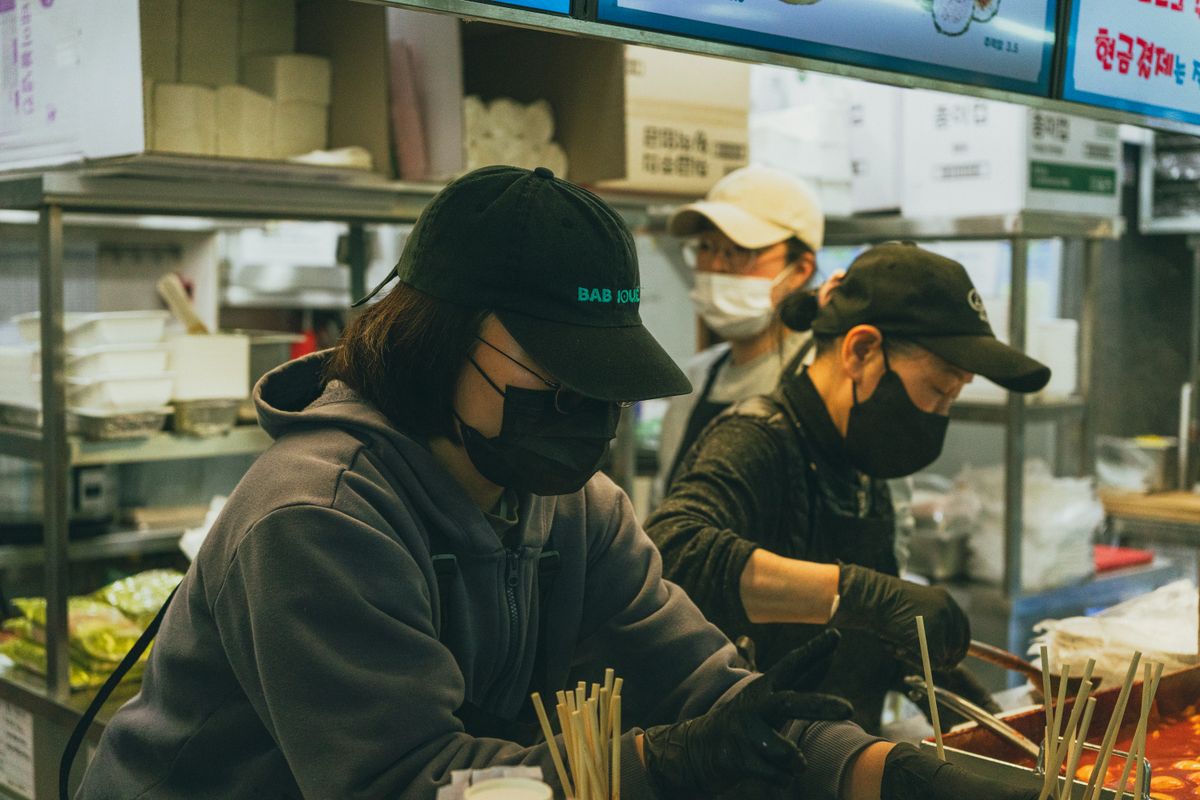
Pointing at what someone else is eating and saying “이거 주세요” works just fine — nobody will judge you for it.
Paying and Wrapping Up
Compliment
masisseoyo
It’s delicious
The Bill
gyesanhae juseyo
The bill, please
Notice a pattern? Almost everything ends in 주세요 (“please give me”). Learn that one word and you can attach it to almost anything you point at — it’s the single most useful word for tourist Korean.
Want to Read the Menu Yourself Next Time?
Ordering by pointing works, but reading Hangul takes a few hours to learn and opens up every menu, sign, and subway stop in the country. Here’s the step-by-step system we recommend for building real Korean from scratch.
START LEARNING KOREAN →