Texting Friends vs Texting Your Boss in Korean

Texting Friends vs Texting Your Boss in Korean: Getting the Register Right (Tap to Hear It Spoken)

Living in Korea · Dating & Relationships · Updated 2026

Texting Friends vs Texting Your Boss in Korean: Getting the Register Right
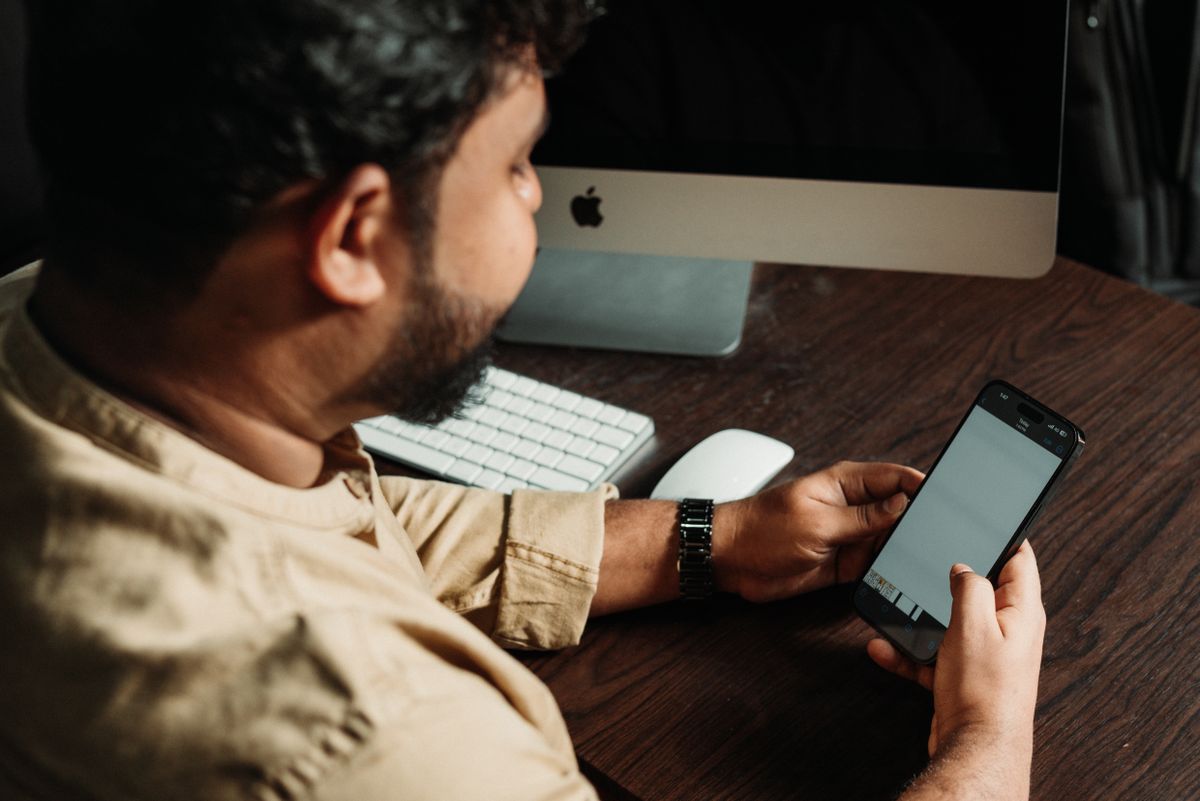
A man checking his phone for messages at an office desk with a computer

Photo: Aathif Aarifeen / Pexels

Quick answer: Texting a boss or coworker in Korea calls for polite 존대말 (jondaemal), even in a quick KakaoTalk message — formality doesn’t relax just because it’s a chat window instead of a phone call. Texting close friends, on the other hand, typically uses casual 반말 (banmal), often shortened even further than in speech.
A businessman having a phone conversation in an office discussing financial charts

Photo: www.kaboompics.com / Pexels

Work Chats Stay Formal

Even a short, informal-looking KakaoTalk message to a manager or senior colleague should use polite sentence endings. Skipping formality in a work chat — even by accident — can come across as careless or disrespectful, more so than a similar slip in spoken conversation.

네, 알겠습니다
ne, algesseumnida
Yes, understood (formal)
확인하겠습니다
hwaginhagesseumnida
I will check/confirm (formal)
도착하면 연락드리겠습니다
dochakhamyeon yeollakdeurigesseumnida
I’ll contact you once I arrive (formal)

Casual Texting With Friends

With close friends, texts often drop full sentence endings entirely, relying on shorter fragments, particles, and slang. This casual register (반말) should generally only be used once both people have agreed to speak informally, or with people clearly younger or the same age as you.

응 알겠어
eung algesseo
Yeah, got it (casual)
도착하면 연락할게
dochakhamyeon yeollakhalge
I’ll message you when I arrive (casual)
안돼 진짜
andwae jinjja
No way, seriously (casual)

Group Chats With Mixed Seniority

Company or team group chats often include people of different ranks, which means the whole chat usually stays polite by default, even among coworkers who are casual one-on-one. It’s common to switch briefly to more formal language whenever a senior person is active in the conversation.

팀장님도 확인 부탁드립니다
timjangnimdo hwagin butakdeurimnida
Please also check this, team leader (formal)
공유드립니다
gongyudeurimnida
Sharing this with you (formal, for sending a file/info)
💡 Cultural note: When in doubt in any work-related chat, defaulting to formal 존대말 is always the safer choice — it’s far more socially costly to be too casual than too formal.

Frequently Asked Questions

Should you text your boss formally in Korean?

Yes. Polite 존대말 is expected even in short KakaoTalk messages to a manager or senior colleague, the same as in spoken conversation.

Can you use banmal (casual speech) in a work group chat?

Generally not by default, especially if people of different seniority are in the chat — most work group chats stay polite unless everyone has explicitly agreed otherwise.

Is it okay to text a boss the same way you’d text a friend?

No — dropping formality in a message to a boss, even accidentally, can come across as careless. It’s safer to keep work texts consistently formal.

How do you know when it’s okay to switch to casual texting with someone?

It’s common and polite to explicitly ask, e.g. 말 놓아도 돼? (“can we speak informally?”), rather than assuming.

Register matters as much as vocabulary

Knowing which words to use is only half of Korean — knowing when to use them is the other half. Build both together.

START LEARNING KOREAN →


© 2026 Learn Korean Online

Disclosure: This page may contain affiliate links. If you purchase through a link on this page, we may receive a commission at no additional cost to you.

Korean Texting Abbreviations 

Korean Texting Abbreviations & Internet Slang: ㅇㅇ, ㄱㄱ, ㅂㅂ Explained (Tap to Hear It Spoken)

Living in Korea · Dating & Relationships · Updated 2026

Korean Texting Abbreviations & Internet Slang: ㅇㅇ, ㄱㄱ, ㅂㅂ Explained

A group of friends laughing together outdoors while looking at a phone

Photo: Sadock Kaisi / Pexels

Quick answer: 이응 (ㅇㅇ) means “yeah/yes,” 가자가자 (ㄱㄱ) means “let’s go,” 바이바이 (ㅂㅂ) means “bye bye,” and 진짜오 (ㄹㅇ) means “for real.” These are consonant-only shorthand built from the first sound of each syllable in a full phrase — extremely common in casual Korean texting, especially among younger speakers, and worth recognizing even if you don’t use them yourself yet.
Close-up of a man's thumbs typing quickly on a smartphone

Photo: RDNE Stock project / Pexels

How Consonant Shorthand Works

Korean texting slang often strips a phrase down to just its initial consonants (초성체, chosungche). Because each Hangul syllable block starts with a consonant, typing just those consonants is much faster than typing the full words, similar to how English uses “brb” or “idk.”

ㅇㅇ
eung-eung / i-eung-i-eung
Yeah / yes (from 응응 or 응)
ㄱㄱ
gi-yeok-gi-yeok
Let’s go / go ahead (from 가자가자)
ㅂㅂ
bi-eup-bi-eup
Bye bye (from 바이바이)

Common Everyday Abbreviations

Beyond consonant shorthand, plenty of shortened words and slang terms show up constantly in Korean texting and social media, similar to how English speakers use “lol” or “tbh.”

진짜오 (또는 ㄹㅇ)
jinjjao / ieul-ieum
For real / seriously
어쪼든
eojjeodeun
Anyway / regardless
직구
jikgu
Directly (buying something from overseas, but also used casually as ‘straight up’)

Slang Worth Recognizing

Some slang words aren’t abbreviations at all, just casual vocabulary that shows up heavily in text but less so in formal speech. Recognizing these helps a lot even before you start using them yourself.

개이득
gae-itdeuk
Super beneficial / great deal (casual intensifier + benefit)
어려워
eoryeowo
That’s tough / hard (used casually, not just literally)
어벨미
eobeolmi
Awkward / cringe-worthy moment (internet slang)
💡 Cultural note: Slang shifts fast, especially among teens and young adults — a term that’s trendy this year may feel dated in a couple of years, similar to English internet slang.

Frequently Asked Questions

What does ㅇㅇ mean in Korean texting?

ㅇㅇ is short for 응응 (eung-eung), a casual way of saying “yeah” or “yes.”

What does ㄱㄱ mean?

ㄱㄱ comes from 가자가자 (gajagaja), meaning “let’s go” or “go ahead,” often used to confirm a plan quickly.

What does ㄹㅇ mean in Korean slang?

ㄹㅇ is shorthand for 진짜 (jinjja), meaning “for real” or “seriously,” used the same way English speakers use “fr.”

Is Korean texting slang safe to use with anyone?

Not always — most of this shorthand is casual (반말) register, appropriate for close friends and peers, but not for texting a boss, teacher, or someone you should speak formally to.

Slang makes more sense once the basics click

These abbreviations are shortcuts for words you already need to know. Build the real vocabulary first, and the shorthand follows naturally.

START LEARNING KOREAN →

© 2026 Learn Korean Online

Disclosure: This page may contain affiliate links. If you purchase through a link on this page, we may receive a commission at no additional cost to you.

Texting Basics 

Texting Basics & KakaoTalk Essentials in Korean: What You Need to Know (Tap to Hear It Spoken)

Living in Korea · Dating & Relationships · Updated 2026

Texting Basics & KakaoTalk Essentials in Korean: What You Need to Know

Close-up of thumbs typing a text message on a smartphone

Photo: RDNE Stock project / Pexels

Quick answer: Almost all everyday texting in Korea happens on KakaoTalk (카카오톡, shortened to 카톡) rather than SMS. Messages show a small number next to them until the other person opens the chat, so 읽음 (ilgeum, “read”) status is visible to both sides — which is why response speed carries more social weight in Korean texting culture than in many other countries.
Close-up view of hands interacting with social media and messaging apps on a smartphone screen

Photo: cottonbro studio / Pexels

Why KakaoTalk, Not SMS

KakaoTalk is the default messaging app for almost everyone in Korea, used for friends, family, and even a lot of work communication. It’s free over wifi/data, supports group chats, stickers, and voice/video calls, which is why traditional SMS is rarely used except for one-time verification codes.

카톡 아이디 있어요?
katok aidi isseoyo?
Do you have a KakaoTalk ID?
카톡해
katokhae
Message me on KakaoTalk
번호 대신 카톡으로 해도 돼?
beonho daesin katokeuro haedo dwae?
Can we message on KakaoTalk instead of by number?

Read Receipts and Response Timing

The small number beside a message disappears once it’s been opened, so both people can usually tell when a message has been seen. Leaving someone on read for a long time (읽음씨, ilgeumssip) can carry social weight, especially with close friends or a partner, though it’s understood that people get busy.

읽음씨 하지 마
ilgeumssip haji ma
Don’t leave me on read (casual/joking)
답장이 늘어요
dapjangi neujeoyo
Your replies are slow
바로 답장할게
baro dapjanghalge
I’ll reply right away

Everyday Texting Phrases

A handful of short, high-frequency phrases cover most casual text exchanges — confirming plans, checking in, or simply acknowledging a message without writing a full sentence.

응응
eung-eung
Yeah yeah / mhm (casual acknowledgment)
알았어
arasseo
Got it / okay
지금 바빨?
jigeum bappa?
Are you busy right now?
💡 Cultural note: Many Koreans keep separate, more casual speech patterns for texting than for speaking out loud — don’t worry if a text feels shorter or more clipped than spoken Korean.

Frequently Asked Questions

What app do Koreans use to text?

KakaoTalk (카카오톡, often shortened to 카톡) is the dominant messaging app in Korea, used for nearly all personal and much work-related texting.

How do Korean read receipts work?

A small number appears next to a sent message and disappears once the recipient has opened the chat, so both people can generally tell when a message has been seen.

Is it rude to leave someone on read in Korea?

It can feel a bit awkward with close friends or a partner, but it’s generally understood that people get busy — it’s more of a light social nudge than a serious offense.

Do Koreans use SMS text messages?

Rarely for everyday conversation — SMS is mostly reserved for one-time verification codes, with KakaoTalk used for actual conversations.

Texting is just conversation in a different format

The words behind KakaoTalk chats are the same words you’ll need everywhere else in Korean. Build a real foundation, one phrase at a time.

START LEARNING KOREAN →

© 2026 Learn Korean Online

Disclosure: This page may contain affiliate links. If you purchase through a link on this page, we may receive a commission at no additional cost to you.

Breakups and Difficult Conversations in Korean

Breakups and Difficult Conversations in Korean (Tap to Hear It Spoken)
이별
Dating & Relationships

Breakups and Difficult Conversations in Korean

Every phrase below is tappable — press it and your browser speaks it aloud, so you can navigate a hard conversation with actual clarity, not guesswork.

A couple having a difficult conversation on a park bench

Difficult relationship conversations deserve the same care in a second language as they do in your first.

Raising a Problem

Bringing something up honestly without it turning into a fight.

얘기 좀 할 수 있을까요?
yaegi jom hal su isseulkkayo?
Can we talk for a bit?
서운했어요
seounhaesseoyo
I felt hurt/disappointed (a common, non-accusatory way to express this)
오해가 있는 것 같아요
ohaega inneun geot gatayo
I think there’s a misunderstanding
제 입장도 들어주세요
je ipjangdo deureojuseyo
Please hear my side too
Worth knowing: 서운하다 is a genuinely useful word — it sits between “sad” and “angry,” expressing hurt without sounding like a direct accusation, which keeps hard conversations from escalating.

Setting a Boundary

Clear, respectful ways to say no or ask for space.

시간이 좀 필요해요
sigani jom piryohaeyo
I need some time
그건 좀 힘들어요
geugeon jom himdeureoyo
That’s a bit difficult for me (a soft way of declining or setting a limit)
혼자 생각할 시간을 주세요
honja saenggakhal siganeul juseyo
Please give me time to think alone

Ending a Relationship

Direct but kind ways to have this conversation, if it comes to that.

우리 헤어져요
uri heeojyeoyo
Let’s break up
더 이상은 안 될 것 같아요
deo isangeun an doel geot gatayo
I don’t think this can continue
그동안 고마웠어요
geudongan gomawosseoyo
Thank you for everything up until now
좋은 사람 만나길 바라요
joeun saram mannagil barayo
I hope you meet a good person (a common, gracious closing line)
Worth knowing: a respectful, in-person breakup conversation is generally valued in Korean dating culture — ending things over text alone (문자로 헤어지다) can land as genuinely disrespectful.

These phrases are just the start

The hardest conversations deserve real fluency, not a rehearsed script — a proper foundation in Korean helps you actually say what you mean.

START LEARNING KOREAN →

© 2026 Learn Korean Online

Disclosure: This page may contain affiliate links. If you purchase through a link on this page, we may receive a commission at no additional cost to you.

Korean Dating Culture

Korean Dating Culture: The Unwritten Rules (Tap to Hear It Spoken)
연애
Dating & Relationships

Korean Dating Culture: The Unwritten Rules Nobody Explains

Every phrase below is tappable — press it and your browser speaks it aloud, so the customs make sense in context, not just as trivia.

Couple holding hands, symbolizing a committed relationship

Korean couples mark their relationship with a set of customs that catch a lot of newcomers off guard.

Anniversaries Are Counted in Days

Korean couples track relationship milestones by day-count, not month or year, at least early on.

백일
baegil
100 days — the first major couple milestone, often celebrated properly
사귄 지 얼마나 됐어요?
sagwin ji eolmana dwaesseoyo?
How long have you been dating?
천일
cheonil
1,000 days — another commonly celebrated milestone
Worth knowing: apps that count the exact number of days a couple has been together are genuinely popular in Korea — hitting 백일 (day 100) is treated as a real occasion, often with a gift or small celebration.

Couple Items

Wearing or carrying matching things is a visible, common way Korean couples signal their relationship.

커플룩
keopeullook
Couple look — matching outfits worn together
커플링
keopeulling
Couple ring — a shared style of ring, not necessarily an engagement ring
우리 커플템 살까요?
uri keopeultem salkkayo?
Should we buy a couple item?
Worth knowing: couple rings are worn casually and don’t signal engagement the way they might elsewhere — they’re a normal, early-relationship gesture rather than a major commitment.

Titles and Status

The words that mark where a relationship officially stands.

우리 사귀자
uri sagwija
Let’s officially date (a real, defining phrase — this moment matters in Korean dating)
남자친구
namjachingu
Boyfriend
여자친구
yeojachingu
Girlfriend
썸타는 중이에요
sseomtaneun jungieyo
We’re in the “something” stage (interested in each other, not officially together yet)
Worth knowing: unlike in many Western dating cultures, “우리 사귀자” is often an explicit, spoken moment — Korean couples generally don’t drift into an official relationship without a clear verbal “yes.”

These phrases are just the start

Knowing the customs is one thing — following the actual conversation your partner and their friends have around you needs a real foundation in Korean.

START LEARNING KOREAN →

© 2026 Learn Korean Online

Disclosure: This page may contain affiliate links. If you purchase through a link on this page, we may receive a commission at no additional cost to you.

Asking Someone Out in Korean


데이트
Dating & Relationships

Asking Someone Out in Korean: From First Message to First Date

Every phrase below is tappable — press it and your browser speaks it aloud, so the ask actually sounds as natural as it should.

Asking Someone Out in Korean

Coffee is the default first-date suggestion in Korea — low-pressure, easy to end early if needed, and everywhere.

Making the First Move

Casual and low-pressure phrasing that doesn’t sound like a formal request.

우리 언제 밥 한번 먹을까요?
uri eonje bap hanbeon meogeulkkayo?
Should we grab a meal sometime? (a common, casual way to suggest a date)
시간 괜찮으면 커피 한잔 어때요?
sigan gwaenchanheumyeon keopi hanjan eottaeyo?
If you have time, how about a coffee?
저랑 데이트 하실래요?
jeorang deiteu hasillaeyo?
Would you like to go on a date with me? (more direct)
Worth knowing: “밥 한번 먹어요” (let’s eat sometime) can be genuine or just a friendly nicety in general conversation — as a direct message after showing romantic interest, though, it reads as a real invitation.

Setting the Details

Once they’ve said yes, this is how the logistics conversation actually goes.

언제 시간 되세요?
eonje sigan doeseyo?
When are you free?
어디서 만날까요?
eodiseo mannalkkayo?
Where should we meet?
그때 뵐게요
geuttae boelgeyo
I’ll see you then
기대돼요
gidaedwaeyo
I’m looking forward to it

On the Date Itself

Getting through the actual conversation once you’re there.

여기 자주 와요?
yeogi jaju wayo?
Do you come here often?
오늘 즐거웠어요
oneul jeulgeowosseoyo
I had a nice time today
다음에 또 만나요
daeume tto mannayo
Let’s meet again sometime
Worth knowing: in Korea it’s common for the person who asked to pay for the first date, though splitting or alternating on later dates is increasingly normal too.

These phrases are just the start

Nailing the invitation is one thing — actually carrying a full conversation through a real date takes a genuine foundation in the language.

START LEARNING KOREAN →

© 2026 Learn Korean Online

Disclosure: This page may contain affiliate links. If you purchase through a link on this page, we may receive a commission at no additional cost to you.

Meeting Your Partner’s Parents


부모님
Dating & Relationships

Meeting Your Partner’s Parents: Korean Phrases for the Big Moment

Every phrase below is tappable — press it and your browser speaks it aloud, so you can practise sounding polished before the moment that actually matters.

Meeting Your Partner's Parents
Meeting Your Partner’s Parents

Meeting the parents in Korea almost always happens over a meal — formality and table manners both matter here.

The First Greeting

This is where formality matters most — these lines stay firmly in the respectful register.

처음 뵙겠습니다
cheoeum boepgesseumnida
Nice to meet you for the first time (very formal, correct for this moment)
말씀 많이 들었습니다
malsseum mani deureosseumnida
I’ve heard a lot about you
잘 부탁드립니다
jal butakdeurimnida
Please look after me kindly (a standard, humble closing line)
Worth knowing: a slight bow accompanies this greeting naturally — the deeper and more deliberate the bow, the more respect it signals for a first meeting like this.

At the Dinner Table

Meals are where most of the real conversation and impression-making happens.

잘 먹겠습니다
jal meokgesseumnida
I will eat well (said before the meal starts)
정말 맛있어요
jeongmal masisseoyo
This is really delicious
잘 먹었습니다
jal meogeosseumnida
I ate well (said after finishing — genuinely important to say)
제가 따라 드릴게요
jega ttara deurilgeyo
Let me pour for you (offering to pour a drink is a polite gesture)
Worth knowing: 잘 먹겠습니다 and 잘 먹었습니다 aren’t optional politeness — skipping them at either end of a meal genuinely reads as odd, especially with someone’s parents watching closely.

Handling the Questions

Parents ask direct questions early — these answers keep things smooth and respectful.

직업이 뭐예요?
jigeobi mwoyeyo?
(they ask) What’s your job?
잘 챙겨주셔서 감사해요
jal chaenggyeojusyeoseo gamsahaeyo
Thank you for taking such good care (of your child)
앞으로 자주 뵐게요
apeuro jaju boelgeyo
I’ll be seeing you often from now on

These phrases are just the start

A single meeting can be rehearsed — an ongoing relationship with your partner’s family needs real Korean underneath it, not just prepared lines.

START LEARNING KOREAN →

© 2026 Learn Korean Online

Disclosure: This page may contain affiliate links. If you purchase through a link on this page, we may receive a commission at no additional cost to you.

Texting Like a Couple


톡
Dating & Relationships

Texting Like a Couple: Korean Messaging Habits and Sweet Nothings

Every phrase below is tappable — press it and your browser speaks it aloud, so you can hear how these lines actually sound before you type them.

Person texting on a smartphone

KakaoTalk, not SMS, is where nearly all Korean couple texting actually happens.

Daily Check-Ins

The small, constant messages that make up most of a couple’s day.

뭐해?
mwohae?
What are you doing? (casual, very commonly sent)
밥 먹었어?
bap meogeosseo?
Have you eaten? (a very standard, caring check-in)
이제 집이야
ije jibiya
I’m home now
잘 자
jal ja
Sleep well (a nightly text between couples)
Worth knowing: “밥 먹었어?” (have you eaten?) shows up everywhere in Korean — between couples, family, friends. It’s a genuine care check, not small talk about food.

Common Abbreviations

Korean texting shortens words constantly — these show up in nearly every couple’s chat log.

ㅇㅇ
(consonants for “eung eung”)
yeah / mhm — shortest possible way to agree
ㅈㅅ
(consonants for jwesong)
sry — short for 죄송 (sorry)
ㅁㅊ
(consonants for michyeo)
“omg” / crazy — reaction to something surprising
ㅎㅇㅎㅇ
(repeated “hi”)
hi hi — a playful, cute greeting
Worth knowing: these consonant-only abbreviations (자음 abbreviations) are built from the first consonant of each syllable — a distinctly Korean texting habit that doesn’t map onto English shorthand at all.

Sweet Nothings

The affectionate lines couples actually send, not textbook romance.

보고 싶어
bogo sipeo
I miss you
사랑해
saranghae
I love you
조심히 와
josimhi wa
Get here safely (said when someone’s on their way over)
오늘도 수고했어
oneuldo sugohaesseo
You worked hard today too (a common warm sign-off)

These phrases are just the start

Texting phrases get you through the easy messages — actually reading tone and nuance in a real chat takes a genuine foundation in the language.

START LEARNING KOREAN →

© 2026 Learn Korean Online

Disclosure: This page may contain affiliate links. If you purchase through a link on this page, we may receive a commission at no additional cost to you.

Korean Flirting Phrases

Korean Flirting Phrases: How to Show Interest Without Being Awkward (Tap to Hear It Spoken)
설렘
Dating & Relationships

Korean Flirting Phrases: How to Show Interest Without Being Awkward

Every phrase below is tappable — press it and your browser speaks it aloud, so you know exactly how natural, low-key interest actually sounds in Korean.

Couple sharing a romantic moment outdoors

Korean flirting tends to be understated rather than bold — small compliments and playful teasing do most of the work.

Gentle Compliments

Low-key, genuine-sounding lines rather than anything over the top.

오늘 예뻐요
oneul yeppeoyo
You look pretty today
웃는 게 예뻐요
utneun ge yeppeoyo
Your smile is pretty
같이 있으면 편해요
gachi isseumyeon pyeonhaeyo
I feel comfortable when I’m with you
눈이 예뻐요
nuni yeppeoyo
You have pretty eyes
Worth knowing: keeping compliments specific and low-key — hair, smile, a particular outfit — reads as far more sincere in Korean than a generic “you’re so beautiful.”

Playful Teasing

Light banter is a big part of how interest gets shown, especially early on.

귀여운 척하지 마세요
gwiyeoun cheokhaji maseyo
Stop acting cute (said teasingly, not as an actual complaint)
저 좋아해요?
jeo joahaeyo?
Do you like me? (often said half-joking to test the waters)
장난이에요
jangnanieyo
Just kidding (softens a teasing comment)
저랑 있는 거 좋아요?
jeorang inneun geo joayo?
Do you like being with me?

Showing You’re Interested

More direct, without crossing into anything too forward.

자꾸 생각나요
jakku saenggangnayo
I keep thinking about you
더 알고 싶어요
deo algo sipeoyo
I want to get to know you more
저 남자친구 없어요
jeo namjachingu eopseoyo
I don’t have a boyfriend (a common way to signal availability, indirectly)
Worth knowing: in Korean dating culture, indirect signalling often does more work than a direct statement — mentioning you’re single, or asking a lot of personal questions, is itself a fairly clear signal.

These phrases are just the start

Reading the tone and formality of a real conversation takes more than a phrase list — a proper foundation in Korean gets you there.

START LEARNING KOREAN →

© 2026 Learn Korean Online

Disclosure: This page may contain affiliate links. If you purchase through a link on this page, we may receive a commission at no additional cost to you.

Marriage & Long-Term Relationships: Korean Commitment Vocabulary

Marriage & Long-Term Relationships: Korean Commitment Vocabulary

Once a relationship moves from dating toward something more permanent, a new layer of vocabulary comes into play — meeting the family, moving in together, engagement, and marriage. Here’s the vocabulary for that whole stage of a relationship.

Meeting the Family

Korean Romanization English
부모님께 인사드리다 bumonimkke insadeurida To formally greet/meet someone’s parents
시댁 sidaek Husband’s family home/in-laws (used by the wife)
처가 cheoga Wife’s family home/in-laws (used by the husband)
Cultural note: Korean has separate, specific terms for “in-laws” depending on which side of the family and who is speaking — this reflects how significant and formally recognized the in-law relationship is within Korean family structure, more distinctly than a single catch-all English term like “in-laws” suggests.

Engagement and Proposal Vocabulary

Korean Romanization English
청혼 cheonghon Proposal (marriage)
저와 결혼해 주시겠어요? jeowa gyeolhonhae jusigesseoyo? Will you marry me? (polite, formal)
약혼 yakhon Engagement
약혼자 yakhonja Fiancé(e)

Marriage Vocabulary

Korean Romanization English
결혼 gyeolhon Marriage
결혼식 gyeolhonsik Wedding ceremony
남편 nampyeon Husband
아내 anae Wife
신혼부부 sinhonbubu Newlywed couple

Living Together Before Marriage

Historically less common than in many Western countries, cohabitation before marriage (동거, donggeo) has become increasingly common among younger generations in Korea, though attitudes still vary significantly by family and region. It’s a useful cultural note if you’re navigating a real relationship rather than just building vocabulary — expectations here can differ noticeably from Western norms depending on the families involved.

Korean Romanization English
동거 donggeo Cohabitation / living together
같이 살자 gachi salja Let’s live together (casual)

Marriage & Long-Term Relationships

    Talking About the Future Together

Korean Romanization English
평생 함께하고 싶어요 pyeongsaeng hamkkehago sipeoyo I want to be with you for life
우리 가정을 꾸리자 uri gajeongeul kkurija Let’s build a family together

This wraps up the Dating & Relationships cluster — head back to the dating vocabulary pillar guide for links to every post in this series, from falling in love through to this final commitment stage.

Cultural attitudes toward marriage and cohabitation vary significantly by generation, region, and family. Pronunciation audio uses your browser’s built-in text-to-speech.