How to Read Korean Idol Names 

How to Read Korean Idol Names and Fan Chants (Tap to Hear It Spoken)

K-Drama & K-Pop Korean · Part 4

How to Read Korean Idol Names and Fan Chants

Ever mispronounced a bias’s name for months because of how it was spelled in English? You’re not alone — romanization is often misleading. Tap any phrase below to hear it spoken correctly.

A large crowd with hands raised at a stadium concert

Fan chants are one of the most distinctive parts of a K-pop concert — and one of the easiest things to actually learn.

Romanized spellings of Korean names are inconsistent by design — there isn’t one universal system, and companies often choose spellings for how they look in English rather than how they sound. That’s why the same syllable can show up as “eo,” “u,” or “o” depending on the group. Once you can read Hangul, this problem disappears entirely because you’re reading the actual sound, not someone’s English approximation of it.

How the audio works: tap the speaker button on any phrase and your device’s built-in Korean voice will say it out loud — no app or download needed.

Common Fan Chant Phrases

Declaring Love

saranghaeyo

I love you (shouted constantly at fan meets and concerts)

Complimenting Looks

jalsaenggyeosseoyo

You’re handsome

Complimenting Looks

yeppeoyo

You’re pretty

Ultimate Praise

choegoyeyo

You’re the best

A hand holding a pen writing in an open notebook

Writing out a name in Hangul a few times is often all it takes to fix the pronunciation you’ve had wrong for months.

Why Hangul Fixes the Problem

Hangul was designed to be phonetic and logical — each block of characters represents exactly one syllable, built from consonant and vowel shapes that correspond directly to how your mouth makes the sound. Once you learn the roughly 24 basic characters, you can sound out any Korean name correctly, no romanization guesswork required. Most people pick up the basics of reading Hangul in a single sitting — it’s one of the most efficient writing systems in the world to learn.

Stop Guessing at Pronunciation — Learn to Read Hangul

Once you can read the actual Korean spelling of a name, you’ll never mispronounce it again — and you’ll pick up dozens of other words along the way. Here’s the step-by-step system we recommend.

START LEARNING KOREAN →


© 2026 Learn Korean Online

Disclosure: This page may contain affiliate links. If you purchase through a link on this page, we may receive a commission at no additional cost to you.

Korean Terms of Endearment

Korean Terms of Endearment: Oppa, Unnie, and More Explained (Tap to Hear It Spoken)

K-Drama & K-Pop Korean · Part 3

Korean Terms of Endearment: Oppa, Unnie, and More Explained

These words show up constantly in K-dramas and fandom conversation — but who calls who what depends entirely on gender and age. Tap any word below to hear it spoken.

A group of friends laughing and embracing each other outdoors

Korean has a specific word for “older sibling” depending on your own gender — these terms extend that same idea to friends too.

This is one of the most confusing parts of Korean for newcomers, because unlike English, the word changes depending on your own gender, not just the other person’s age. Once the logic clicks, it’s actually simple — it just takes seeing it laid out clearly once.

How the audio works: tap the speaker button on any word and your device’s built-in Korean voice will say it out loud — no app or download needed.

What a Woman Calls an Older Friend

Older Male Friend

oppa

Used by a woman for an older brother, boyfriend, or close male friend

Older Female Friend

unnie

Used by a woman for an older sister or close female friend

What a Man Calls an Older Friend

Older Male Friend

hyung

Used by a man for an older brother or close male friend

Older Female Friend

nuna

Used by a man for an older sister or close female friend

A group of friends hugging each other and smiling

These words are used with close friends just as often as with actual siblings — that’s exactly why K-drama characters use them so freely.

Words for Couples

Romantic Partner

jagiya

Honey / babe (used between romantic partners)

Affectionate

aegiya

Baby (affectionate, romantic or with a close friend)

One important note: these are casual, close-relationship words. Using “오빠” with a stranger or someone you’ve just met would sound odd or overly familiar — save these for people you actually know, or characters clearly in that kind of relationship on screen.

These Words Are the Tip of a Bigger System

Korean has an entire structure of politeness and relationship levels built into the language itself — once you understand it, dialogue in dramas and idol interviews suddenly makes a lot more sense. Here’s the system we recommend for learning it properly.

START LEARNING KOREAN →

© 2026 Learn Korean Online

Disclosure: This page may contain affiliate links. If you purchase through a link on this page, we may receive a commission at no additional cost to you.

K-Pop Fan Korean

K-Pop Fan Korean: Words Every Fan Should Know (Tap to Hear It Spoken)

K-Drama & K-Pop Korean · Part 2

K-Pop Fan Korean: Words Every Fan Should Know

Fan Twitter, Weverse, comment sections — K-pop fandom runs on a specific set of Korean words that get dropped into English sentences constantly. Tap any word below to hear it spoken.

A concert crowd with hands raised, enjoying a live music performance

These words show up in fan chants, comment sections, and everyday fandom conversation.

A lot of fandom vocabulary gets used in English conversations exactly as-is — no translation, no romanization changes. Knowing where these words actually come from (and what they literally mean) makes the whole fandom experience click into place a little more.

How the audio works: tap the speaker button on any word and your device’s built-in Korean voice will say it out loud — no app or download needed.

Release and Performance Words

New Release

keombaek

Comeback (a new release after time away — from the English word)

Performance

mudae

Stage (used for any live performance, e.g. “their comeback stage”)

Meeting Fans

paensainhoe

Fan signing event

Fandom Identity

Your Favourite

choeae

Bias / favourite member (literally “most loved”)

Being a Fan

deokjil

Fan activities / being deeply into a fandom

An excited concert audience with hands raised, enjoying a live performance

You’ve almost certainly heard this next one shouted at every concert and fancam — it’s the single most-used word in the entire fandom vocabulary.

Cheering Someone On

Encouragement

hwaiting

Fighting! / You can do it! (said before anything — a performance, an exam, a hard day)

“화이팅” doesn’t really translate cleanly into English — it’s closer to a mix of “good luck” and “you’ve got this,” and Koreans say it to each other constantly, not just in fandom contexts. Once you notice it, you’ll hear it everywhere.

Fandom Vocabulary Is Just the Surface

Once these words feel natural, you’re closer to actual Korean than you’d think — the grammar and reading skills are the next step. Here’s the system we recommend for building on what you already know.

START LEARNING KOREAN →

© 2026 Learn Korean Online

Disclosure: This page may contain affiliate links. If you purchase through a link on this page, we may receive a commission at no additional cost to you.

Common K-Drama Phrases

Common K-Drama Phrases You’ll Hear in Every Episode (Tap to Hear It Spoken)

K-Drama & K-Pop Korean · Part 1

Common K-Drama Phrases You’ll Hear in Every Episode

If you’ve watched more than one K-drama, you’ve already heard these words dozens of times — even if the subtitles translated them a different way each time. Tap any phrase below to hear it spoken.

Three friends sitting on a couch watching TV together at night

Once you know these, you’ll start catching them before the subtitles even load.

Subtitles are great, but they can’t capture everything — a single Korean word often gets translated three or four different ways depending on the scene. Once you recognise these phrases by ear, you’ll notice things the subtitles smooth over, and you’ll pick up the actual rhythm of how Koreans talk to each other.

How the audio works: tap the speaker button on any phrase and your device’s built-in Korean voice will say it out loud — no app or download needed.

Reactions You’ll Hear Constantly

Shock or Excitement

daebak

No way! / Amazing! (used for both good and shocking news)

Sympathy or Frustration

aigo

Oh no / oh dear (said by everyone, especially older characters)

Disbelief

jinjja?

Really? / Seriously?

Disbelief, Stronger

michyeosseo?

Are you crazy? (also just “this is insane”)

A group of friends cheering while watching TV together

Once your ear catches these words, K-drama marathons hit differently.

Phrases Between Characters

Interrupting a Scene

jamkkanman

Wait a second / hold on

Checking In

gwaenchana?

Are you okay?

Once you have these down, try watching a scene without subtitles for a few seconds at a time — you’ll be surprised how much of the emotional beat you can follow just from tone and these handful of words.

Ready to Understand More Than the Reactions?

Recognising a handful of phrases is a great start — but reading actual dialogue takes learning Hangul and basic sentence structure. Here’s the step-by-step system we recommend for building real Korean from scratch.

START LEARNING KOREAN →

© 2026 Learn Korean Online

Disclosure: This page may contain affiliate links. If you purchase through a link on this page, we may receive a commission at no additional cost to you.

Emergency & Help Phrases

Emergency & Help Phrases in Korean: A Tourist’s Phrasebook (Tap to Hear It Spoken)

Tourist Korean · Part 6

Emergency & Help Phrases in Korean

You’ll hopefully never need most of these — but having them ready means one less thing to panic about if something does go wrong. Tap any phrase below to hear it spoken.

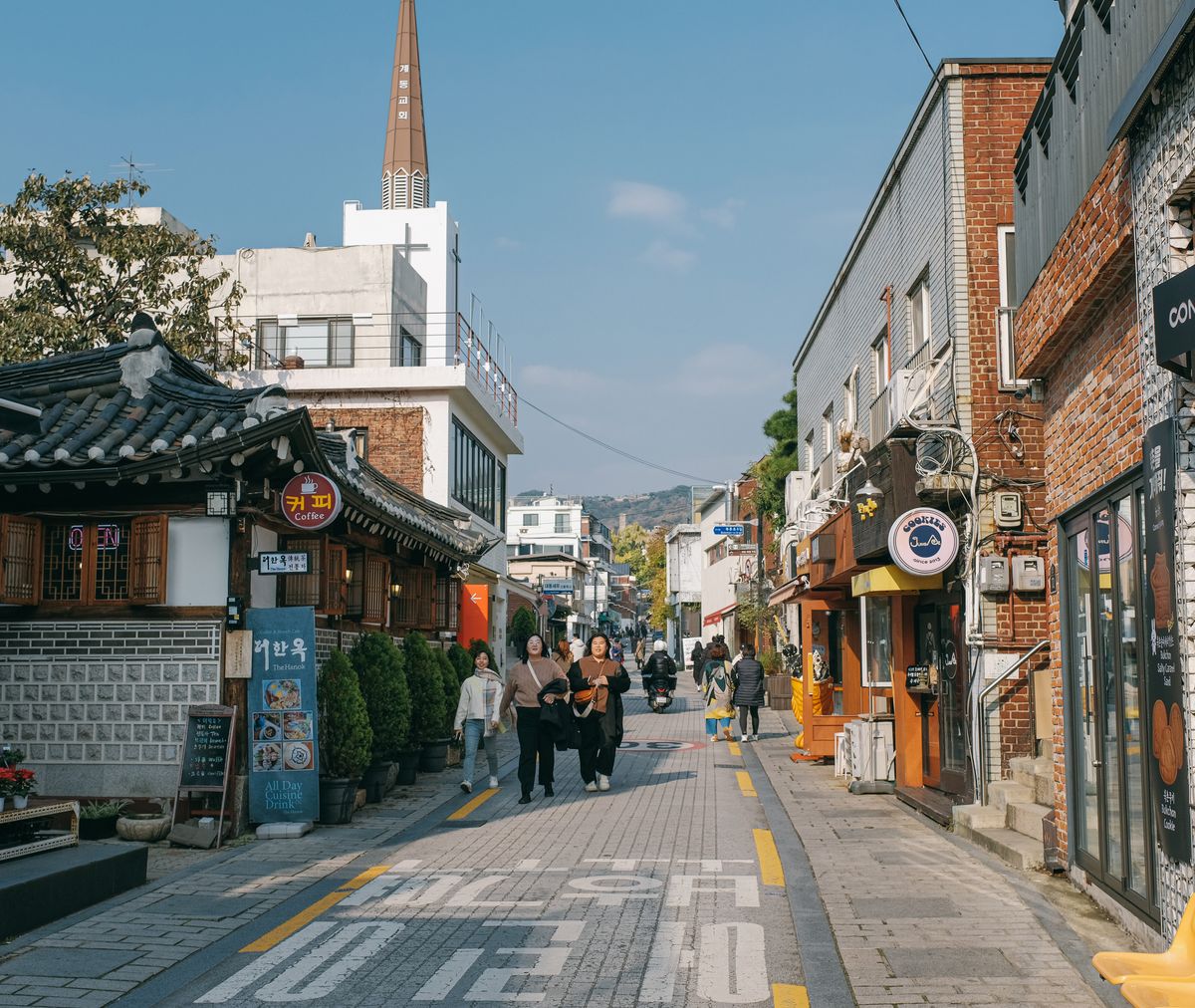
A street in Seoul, South Korea with shops and pedestrians under a blue sky

Korea is one of the safest countries for tourists — but it’s still worth knowing what to say if you need help.

South Korea has excellent emergency services, and English support is more available than many visitors expect — especially in Seoul and other major cities. Still, the first few seconds of any stressful situation go a lot more smoothly if you can say what you need in Korean rather than fumbling for a translation app.

In a genuine emergency: dial 112 for police or 119 for fire and ambulance anywhere in South Korea. Both have English-speaking operators available.
How the audio works: tap the speaker button on any phrase and your device’s built-in Korean voice will say it out loud — no app or download needed.

Asking for Help

Urgent

dowajuseyo!

Help me!

Not Feeling Well

jeoneun apayo

I’m sick / I’m in pain

Calling the Authorities

gyeongchareul bulleojuseyo

Please call the police

Health and Pharmacy

Finding a Pharmacy

yakgugi eodiyeyo?

Where is the pharmacy?

Getting to a Hospital

byeongwone gaya haeyo

I need to go to the hospital

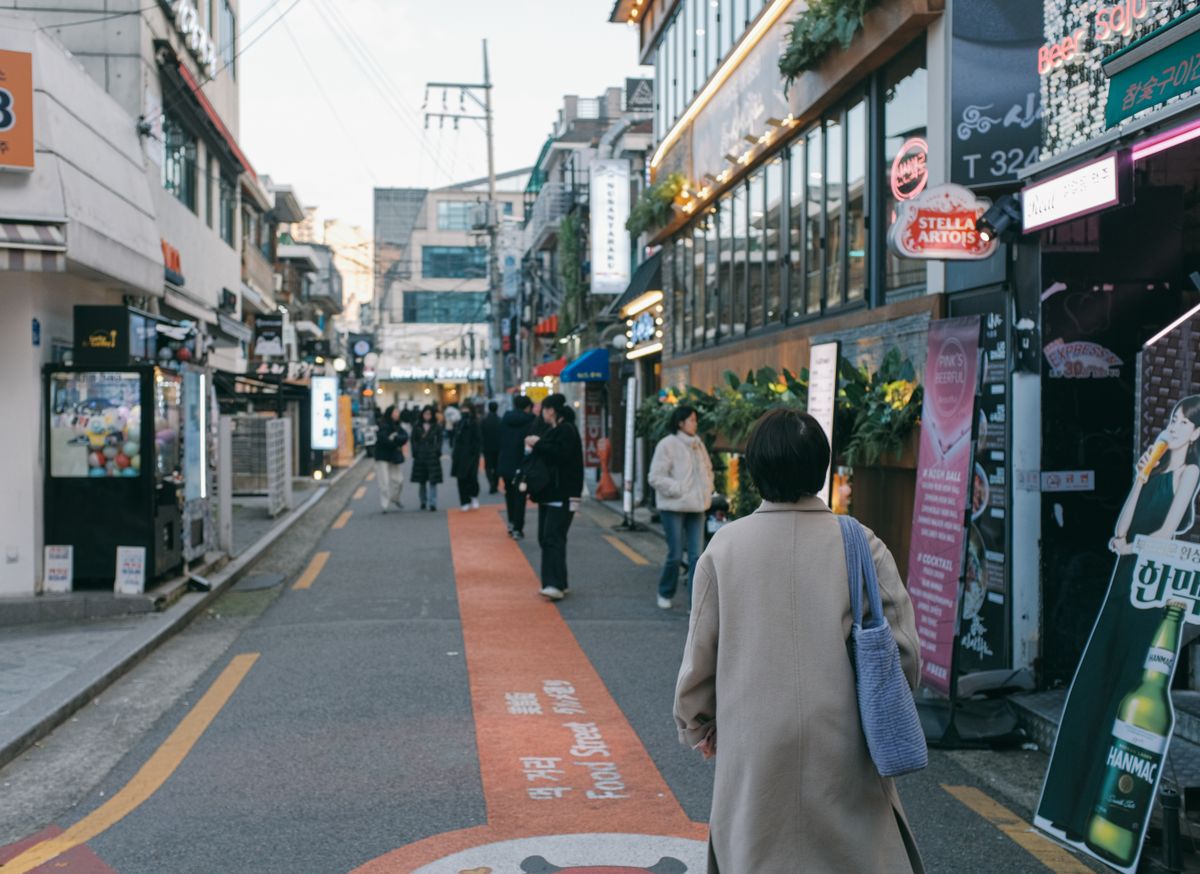
Pedestrians walking on a busy street in Seoul, South Korea

Pharmacies (약국) are easy to spot on almost any main street and staff often speak at least some English.

Lost Items and Documents

Lost Passport

je yeogwoneul ireobeoryeosseoyo

I lost my passport

Not Understanding

yeongeo hal su isseoyo?

Can you speak English?

If you lose your passport, your embassy is the first call to make — but being able to explain the basics to a Korean police officer or hotel staff member in the meantime will make the whole process faster and less stressful.

The Best Emergency Plan Is Understanding More Korean

Phrasebook Korean gets you through a crisis — real Korean means you understand what’s happening around you in the first place. Here’s the step-by-step system we recommend for building that foundation.

START LEARNING KOREAN →

© 2026 Learn Korean Online

Disclosure: This page may contain affiliate links. If you purchase through a link on this page, we may receive a commission at no additional cost to you.

Greetings & Introductions

Greetings & Introductions in Korean: A Tourist’s Phrasebook (Tap to Hear It Spoken)

Tourist Korean · Part 5

Greetings & Introductions in Korean

Korean has different politeness levels for different situations — but as a tourist, you only need the polite form and it will never let you down. Tap any phrase below to hear it spoken.

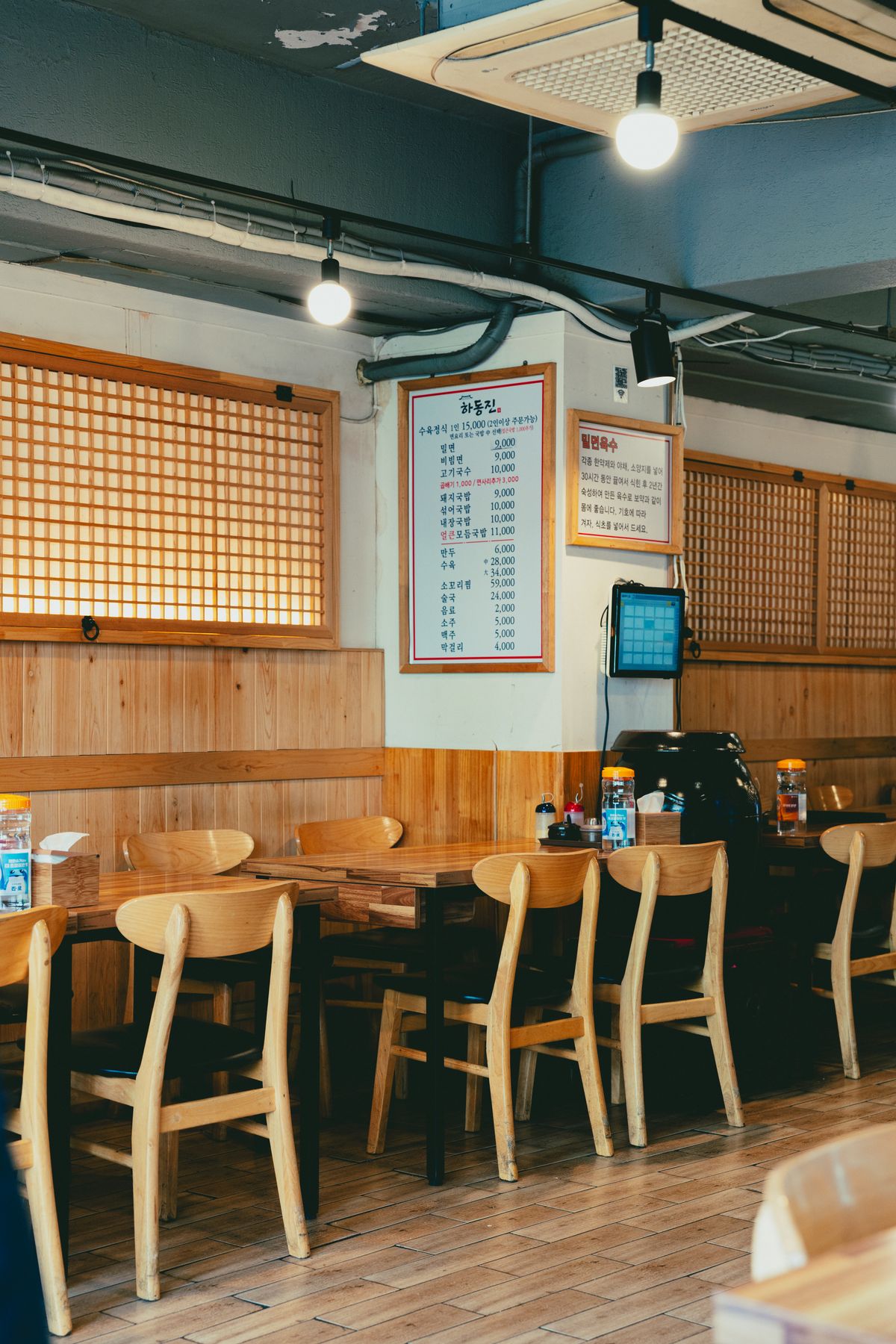
Cozy interior of a traditional Korean restaurant in Seoul

A warm “안녕하세요” goes a long way, whether you’re checking into a guesthouse or sitting down for dinner.

You’ll say these words more than any others on your trip. Korean greetings are simple once you get past the pronunciation, and using even one or two makes a genuinely good impression — Koreans are used to tourists trying, and it’s appreciated far more than you’d expect.

How the audio works: tap the speaker button on any phrase and your device’s built-in Korean voice will say it out loud — no app or download needed.

Saying Hello

Any Time of Day

annyeonghaseyo

Hello (polite, works for anyone, any time)

Basic Manners

gamsahamnida

Thank you

Apologising

joesonghamnida

I’m sorry

Introducing Yourself

Your Name

je ireumeun [name]ieyo

My name is [name] (swap in your own name)

Meeting Someone

mannaseo bangawoyo

Nice to meet you

Where You’re From

jeoneun yeonggugeseo wasseoyo

I’m from the UK (swap in your own country)

Managing Expectations

hangugeoreul jogeum hal su isseoyo

I can speak a little Korean

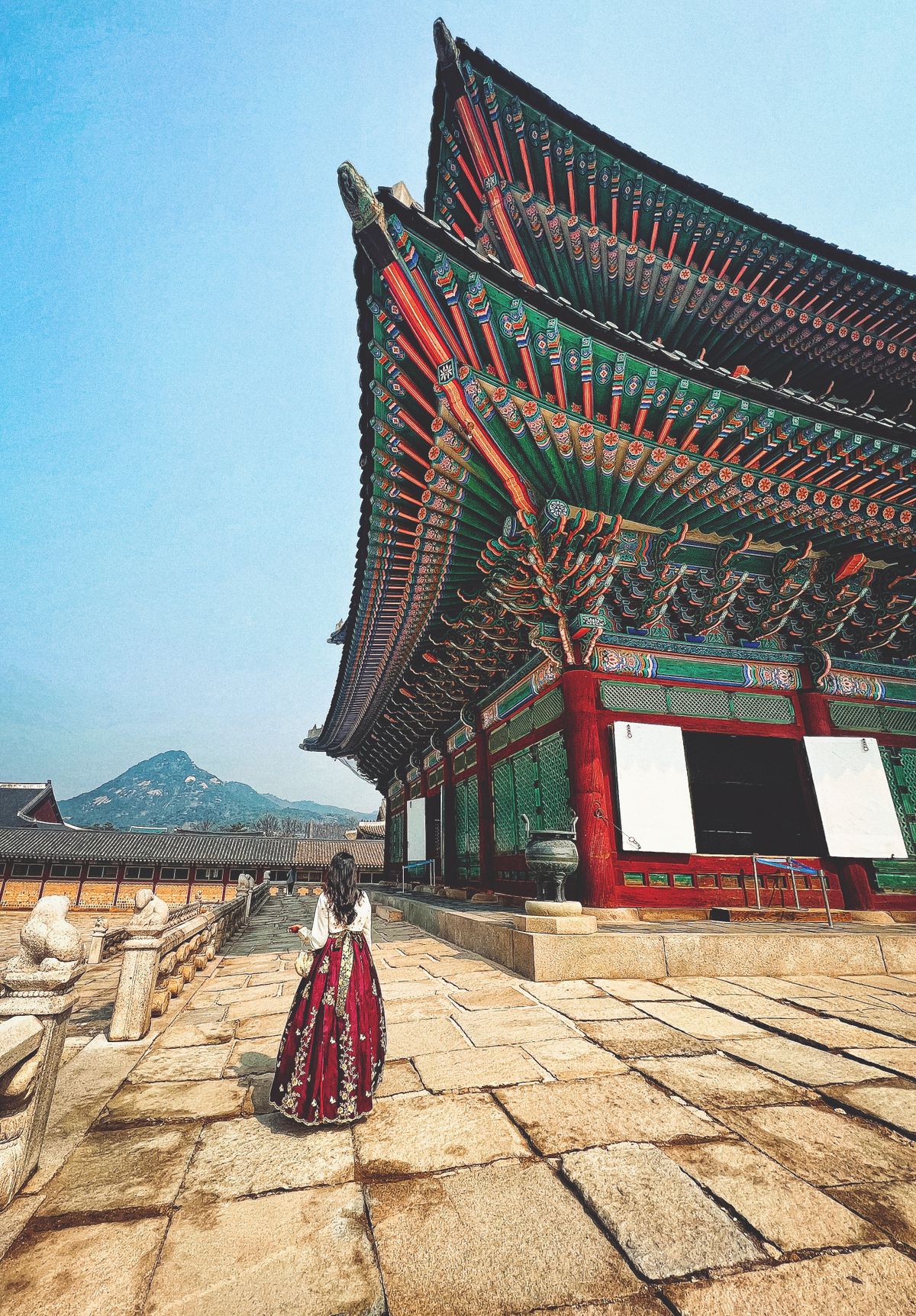
A visitor in traditional hanbok clothing at Gyeongbokgung Palace, Seoul

Say hello to the staff at a palace or hanbok rental shop and you’ll usually get a smile back — and sometimes a tip or two nobody else gets.

Saying Goodbye

You’re Leaving

annyeonghi gyeseyo

Goodbye (said to someone staying behind)

They’re Leaving

annyeonghi gaseyo

Goodbye (said to someone who is leaving)

Notice these two goodbyes are different depending on who’s actually walking away — it trips people up constantly, so don’t worry if you mix them up. Koreans will understand exactly what you mean either way.

Ready to Move Past “Just Getting By”?

Greetings and small talk are the first door into a language — once they’re second nature, real conversations start to open up. Here’s the step-by-step system we recommend for building on what you’ve learned.

START LEARNING KOREAN →

© 2026 Learn Korean Online

Disclosure: This page may contain affiliate links. If you purchase through a link on this page, we may receive a commission at no additional cost to you.

Getting Around Korea: Transportation 

Getting Around Korea: Transportation Phrases for Tourists (Tap to Hear It Spoken)

Tourist Korean · Part 4

Getting Around Korea: Transportation Phrases for Tourists

Korea’s subway and bus system is one of the best in the world — once you know a few phrases to get in a taxi, check a bus route, or tell the driver where to stop. Tap anything below to hear it spoken.

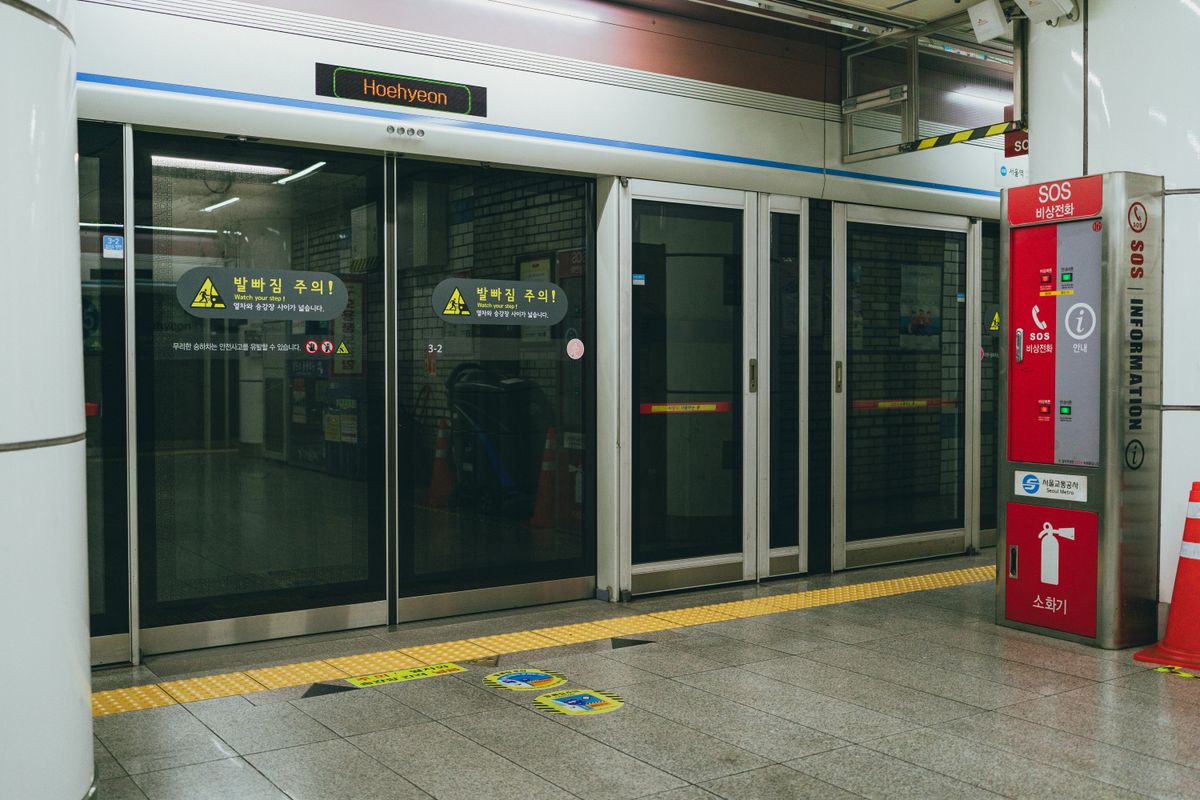
Entrance to a Seoul subway platform with signage

Seoul’s subway is famously easy to navigate — signs are in English too, but these phrases help with the human parts.

Most tourists rely on the subway for the bulk of their trip, since it’s signposted in English as well as Korean. Taxis and buses are where a little spoken Korean actually pays off — drivers won’t always speak English, and typing an address can be slow when you’re in a hurry.

How the audio works: tap the speaker button on any phrase and your device’s built-in Korean voice will say it out loud — no app or download needed.

Taking a Taxi

Getting In

yeogiro gajuseyo

Please take me here (show your phone map)

Time

eolmana geollyeoyo?

How long does it take?

Getting Out

yeogiseo naeryeojuseyo

Please let me off here

Buses and Trains

Checking a Route

i beoseuga myeongdonge gayo?

Does this bus go to Myeongdong? (swap the place name)

Buying a Ticket

pyo han jang juseyo

One ticket, please

Next Stop

daeum yeogi eodiyeyo?

What’s the next station?

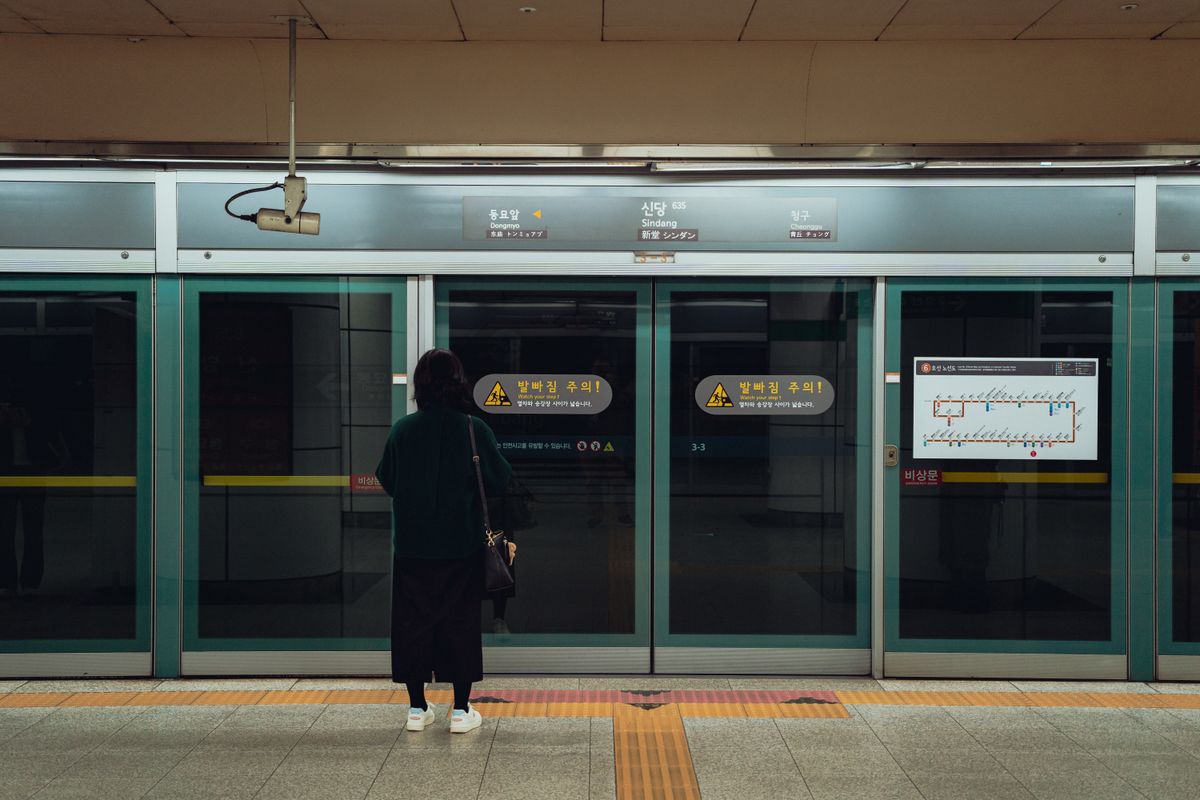
A person waiting at a modern subway station in Suwon, South Korea

Get a T-money card as soon as you land — it works on subways, buses, and even some taxis nationwide.

One practical tip that has nothing to do with the language: download a Korean-friendly map app like Naver Map or KakaoMap before you land. Google Maps’ walking and transit directions are unreliable in South Korea, but these phrases will still get you the rest of the way when the app runs out of answers.

Understand What’s Being Announced, Not Just What You Ask

Subway announcements, platform signs, bus destination boards — they’re all in Korean first. Once you can read Hangul, travelling stops being a series of guesses. Here’s the step-by-step system we recommend.

START LEARNING KOREAN →

© 2026 Learn Korean Online

Disclosure: This page may contain affiliate links. If you purchase through a link on this page, we may receive a commission at no additional cost to you.

Numbers & Shopping in Korean

Numbers & Shopping in Korean: A Tourist’s Phrasebook (Tap to Hear It Spoken)

Tourist Korean · Part 3

Numbers & Shopping in Korean: A Tourist’s Phrasebook

Markets, cosmetics shops, street stalls — Korea is a shopping paradise, but prices fly by fast. Learn to hear the numbers and ask the questions that matter. Tap anything below to hear it spoken.

A busy shopping street in Seoul with people walking past shops

From street stalls to department stores, a little number-sense goes a long way.

Korean actually has two number systems, and it trips up almost every first-time visitor. The good news: for shopping, you mostly only need one of them — the Sino-Korean numbers, which are what’s used for prices, phone numbers, and money in general.

How the audio works: tap any Korean word or phrase and your device’s built-in Korean voice will say it out loud — no app or download needed.

Sino-Korean Numbers (Use These for Prices)

Prices are usually shown as digits anyway, so you don’t need to recognise the words to shop — but being able to say a number back (especially when haggling) makes a real difference.

Asking About Price and Options

Price

igeo eolmayeyo?

How much is this?

Haggling

jogeum kkakka juseyo

Please give me a small discount (markets only, not shops)

Options

dareun saek isseoyo?

Do you have another colour?

Payment

kadeu doenayo?

Can I pay by card?

Neon shop signs on a busy shopping street in Myeongdong, Seoul at night

Myeongdong is one of the best places to actually use these phrases — dozens of small shops, all expecting some back-and-forth.

Politely Declining

Just Browsing

geunyang bolgeyo

I’m just looking, thanks

One thing to know: haggling is normal and expected in open-air markets like Namdaemun or Dongdaemun, but not in department stores, convenience stores, or chain shops — the price on the tag is the price.

Numbers Are Just the Start

Once you’re comfortable with numbers, the next step is being able to read Hangul on sight — after that, shop signs, menus and price tags stop being a guessing game entirely. Here’s the step-by-step system we recommend.

START LEARNING KOREAN →

© 2026 Learn Korean Online

Disclosure: This page may contain affiliate links. If you purchase through a link on this page, we may receive a commission at no additional cost to you.

Ordering Food in Korean

Ordering Food in Korean: A Tourist’s Phrasebook (Tap to Hear It Spoken)

Tourist Korean · Part 2

Ordering Food in Korean: A Tourist’s Phrasebook

Staring at a menu you can’t read is part of the fun of travelling — but knowing a few phrases means you’ll actually get what you want. Tap any phrase below to hear how it’s really pronounced.

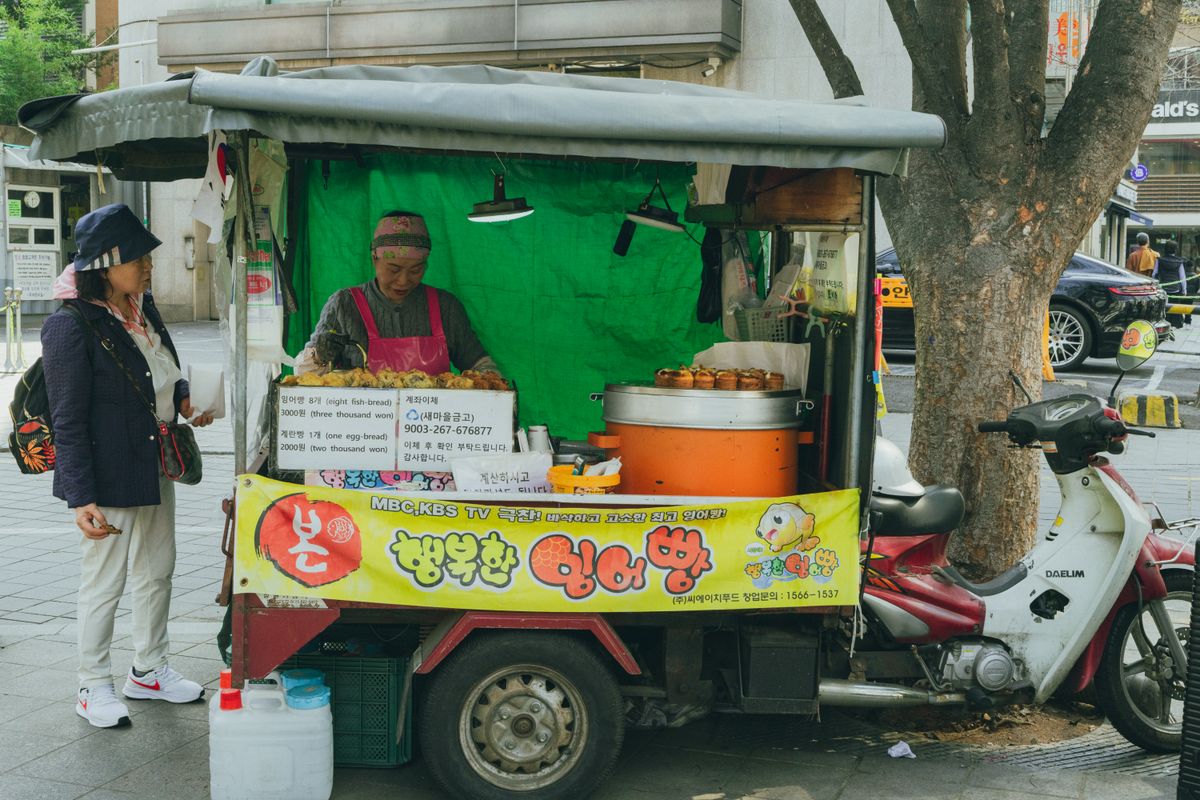
A traditional Korean street food stall in Seoul selling snacks

Street stalls, sit-down restaurants, or a convenience store meal — these phrases work everywhere.

Korean restaurants and food stalls move fast, and staff generally won’t switch to English just because you look like a tourist. That’s not unfriendly — it’s just how it works. A handful of short phrases will get you seated, fed, and out the door with a full stomach and no awkward pointing-and-hoping.

How the audio works: tap the speaker button on any phrase and your device’s built-in Korean voice will say it out loud — no app or download needed.

Getting Seated and Ordering

Getting Attention

yeogiyo

Excuse me! (the standard way to call staff over)

Menu

menyupan juseyo

Menu, please

Ordering

igeo juseyo

This one, please (point at the menu or a photo)

Quantity

du gae juseyo

Two, please

Special Requests

Spice Level

maepji anke haejuseyo

Please make it not spicy

Allergies

jeoneun ttangkong allereugiga isseoyo

I have a peanut allergy (swap in any ingredient)

Drinks

mul jom juseyo

Water, please (usually free and refilled without asking)

Street food vendors preparing dishes at a market in Seoul

Pointing at what someone else is eating and saying “이거 주세요” works just fine — nobody will judge you for it.

Paying and Wrapping Up

Compliment

masisseoyo

It’s delicious

The Bill

gyesanhae juseyo

The bill, please

Notice a pattern? Almost everything ends in 주세요 (“please give me”). Learn that one word and you can attach it to almost anything you point at — it’s the single most useful word for tourist Korean.

Want to Read the Menu Yourself Next Time?

Ordering by pointing works, but reading Hangul takes a few hours to learn and opens up every menu, sign, and subway stop in the country. Here’s the step-by-step system we recommend for building real Korean from scratch.

START LEARNING KOREAN →

© 2026 Learn Korean Online

Disclosure: This page may contain affiliate links. If you purchase through a link on this page, we may receive a commission at no additional cost to you.

Asking for Directions in Korean

Asking for Directions in Korean: A Tourist’s Phrasebook (Tap to Hear It Spoken)

Tourist Korean · Part 1

Asking for Directions in Korean: A Tourist’s Phrasebook

Lost in Seoul with no idea how to ask a stranger which way to the subway? Here are the exact phrases you need — tap any of them to hear how it’s actually pronounced.

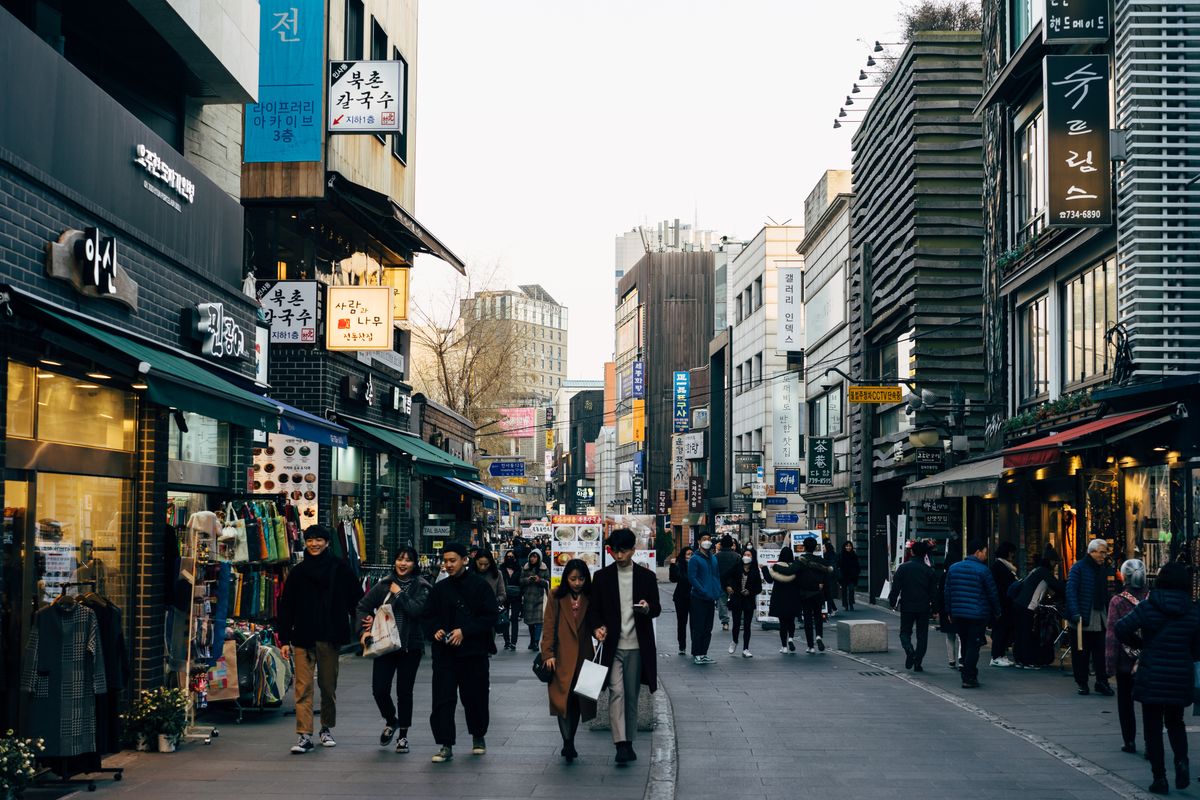
A busy street in Seoul, South Korea with shop signs and pedestrians

Seoul’s streets are easy to navigate once you know a few key phrases.

You don’t need to be fluent in Korean to get around Seoul, Busan, or anywhere else in South Korea. Most tourists only ever need a small handful of phrases — and once you can say them with confidence, asking a stranger for help stops being scary and starts being kind of fun.

Below are the phrases that come up again and again when you’re trying to find your way somewhere. Each one has the Korean script, how to say it (romanized), what it means, and a speaker button so you can hear the real pronunciation before you try it yourself.

How the audio works: tap the speaker button on any phrase and your device’s built-in Korean voice will say it out loud. No app or download needed — it works right in the browser on phones, tablets, and computers.

Getting Someone’s Attention Politely

Basic Politeness

sillyehamnida

Excuse me (formal, polite — safe to use with anyone)

Getting Help

jeogiyo

Excuse me! (casual, used to call a passerby or staff)

Asking Where Something Is

Finding a Place

jihacheollyeogi eodiyeyo?

Where is the subway station?

Finding a Place

hwajangsiri eodiyeyo?

Where is the bathroom?

Finding a Place

i geuncheoe pyeonuijeomi isseoyo?

Is there a convenience store near here?

Entrance to a Seoul subway platform with signage

Subway staff are used to tourists — a short phrase and a point at your phone map will usually get you sorted.

Understanding the Directions Back

Here’s the tricky part: once you ask, someone is going to answer you — often quickly. These are the direction words to listen for so you can at least catch the gist.

Direction

jikjinhaseyo

Go straight

Direction

oenjjogeuro gaseyo

Go left

Direction

oreunjjogeuro gaseyo

Go right

Direction

yeogiseo gakkawoyo

It’s close from here

Saying Thank You

Closing It Out

gamsahamnida

Thank you (polite, works in any situation)

That’s genuinely most of what you’ll need. String a few of these together — “실례합니다, 지하철역이 어디예요?” (“Excuse me, where’s the subway station?”) — and you’ll get a lot further than pointing at your phone and hoping.

Want to Actually Hold a Conversation, Not Just Ask Directions?

This is just one small piece of what you’ll need for a trip to Korea. If you want to go from a handful of survival phrases to genuinely understanding and speaking Korean, here’s the step-by-step system we recommend.

START LEARNING KOREAN →

© 2026 Learn Korean Online

Disclosure: This page may contain affiliate links. If you purchase through a link on this page, we may receive a commission at no additional cost to you.